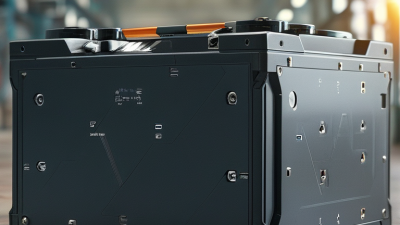
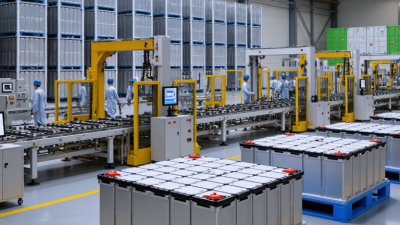
The global battery market is entering 2026 with stronger demand and tougher purchasing decisions. For international buyers, lithium ion battery cells are no longer judged by price alone. Safety records, cycle life, energy density, traceability, and supply consistency now matter equally. A cell that looks attractive in a spreadsheet may perform poorly in a hot warehouse or under repeated fast charging.
The International Energy Agency reported that global battery demand for electric vehicles exceeded 1 TWh in 2024. It also expects demand to grow substantially this decade as electric mobility expands. BloombergNEF’s 2024 Battery Price Survey placed the average lithium-ion battery pack price at 115 US dollars per kWh. However, pack prices do not reveal every cell-level difference. Chemistry, format, production yield, warranty terms, and testing standards can change the final value. The comparison is useful, but not perfect.
This guide examines leading cell options for global buyers in 2026. It considers lithium iron phosphate, nickel-manganese-cobalt, cylindrical, prismatic, and pouch designs. Benchmark Mineral Intelligence continues to track intense competition among Asian, European, and North American manufacturers. That competition creates more choices, but also more uncertainty. Product sheets can be incomplete. Real-world results may vary. Buyers should request current test data, independent certifications, batch information, and documented thermal-abuse results before signing supply agreements. Experience matters here. A reliable cell must survive shipping, assembly, storage, and years of practical use—not merely perform well during a short laboratory test.

2026 Top Lithium Ion Battery Cells for Global Buyers
What Lithium-Ion Battery Cells Are
For global buyers, a lithium-ion battery cell is the smallest electrochemical unit that stores and releases electrical energy. It contains a positive electrode, negative electrode, separator, electrolyte, and protective casing. During charging, lithium ions move through the electrolyte toward the negative electrode. During discharge, they travel back and produce usable electrical power. The separator prevents direct contact between electrodes. A cell is not the same as a battery pack. A pack combines cells with wiring, sensors, cooling, and a battery management system. That distinction matters.
Cell performance depends on chemistry, design, temperature, and manufacturing quality. Cylindrical cells usually offer consistent dimensions and mechanical strength. Pouch cells can reduce weight but need careful structural support. Prismatic cells provide efficient space usage in larger systems. Chemistry also changes the balance between energy density, cycle life, safety, and cost. High energy density is not automatically the best choice. Thermal behavior matters more in demanding applications. Real procurement is less tidy.
Reliable evaluation starts with capacity, voltage range, cycle testing, and resistance data. Buyers should request test conditions, production dates, tolerances, and traceability records. Independent reports can support claims, but they should match the exact cell model and batch. Transport documentation and relevant safety testing also require attention, including UN 38.3 and applicable IEC requirements. A neat datasheet can still hide important limits. Ask uncomfortable questions. Capacity at what temperature? After how many cycles? No cell is perfect.

In 2026, cell selection depends on application, climate, duty cycle, and transport requirements. LFP cells remain strong for buses, storage cabinets, and commercial vehicles. Their iron-phosphate cathode supports long cycling and stable thermal behavior. They also reduce dependence on nickel and cobalt. Energy density remains lower, especially where every kilogram matters.
NMC cells provide higher energy density for passenger vehicles and compact equipment. They can reduce pack size and improve driving range. However, nickel-rich designs require tighter thermal control and careful charging limits.
NCA cells offer similar energy advantages, but manufacturing consistency becomes especially important. LMFP chemistry aims to improve LFP energy density while preserving much of its durability. Results can vary between production lines.
Sodium-ion cells are also gaining attention for low-cost, cold-region, and stationary uses. Their lower energy density limits some mobile applications.
Tips: Ask for tested energy density, cycle-life data, and low-temperature results. Request records from production cells, not only laboratory prototypes. Check balancing accuracy across a complete module. Review thermal propagation testing and charging behavior near freezing temperatures. A factory sample can mislead. Independent verification is worth the cost. Procurement teams should also examine recycling routes, warranty assumptions, and regional transport rules. Chemistry is only one part of reliability.
2026 Top Lithium Ion Battery Cells for Global Buyers
Which Cell Formats Suit Different Applications
Cell format should follow the application, not fashion. Cylindrical cells suit power tools, light electric vehicles, and compact battery packs. Their steel cases resist swelling and support automated assembly. However, many small cells create more welds, sensors, and possible connection points. That extra complexity deserves careful factory inspection.
Prismatic cells offer a rigid housing and efficient use of internal space. They work well in buses, energy storage cabinets, and commercial vehicles requiring strong structural support. Pouch cells remove much of the casing weight and can provide excellent packaging flexibility. They need firm compression, though. Without it, swelling can affect cycle life and safety margins.
Chemistry also changes the decision. The International Energy Agency reported that LFP batteries represented nearly half of the global electric-car battery market in 2024. LFP generally supports cost-sensitive, high-cycle applications, while nickel-rich chemistries favor higher energy density. BloombergNEF reported an average lithium-ion pack price of 115 dollars per kWh in 2024, but cell pricing varies by chemistry, volume, and qualification requirements. Buyers should request tested capacity, impedance data, cycle results, and thermal-abuse evidence. A cheaper cell can become expensive after integration. My practical concern is simple: format comparisons often ignore service access. That is a mistake. A dense pack may look efficient on paper, yet technicians may struggle to isolate one failed module.
| Cell Format | Typical Dimensions | Common Chemistries | Typical Nominal Voltage | Typical Capacity Range | Typical Cell Energy | Key Advantages | Design Considerations | Best-Fit Applications |
|---|---|---|---|---|---|---|---|---|
| 18650 Cylindrical | Approximately 18 mm diameter × 65 mm length | NMC NCA LFP | 3.2 V for LFP 3.6–3.7 V for NMC/NCA |
Typically 2.0–3.6 Ah | Approximately 6.4–13.3 Wh | Established format; broad equipment compatibility; strong availability of holders, busbars, and assembly tooling; good balance of energy and power. | Requires many cells for high-capacity packs; more interconnects can increase assembly labor and failure points; thermal propagation protection is essential. | Power tools Portable equipment Light electric mobility Battery modules |
| 21700 Cylindrical | Approximately 21 mm diameter × 70 mm length | NMC NCA LFP | 3.2 V for LFP 3.6–3.7 V for NMC/NCA |
Typically 3.0–6.0 Ah | Approximately 9.6–22.2 Wh | Higher capacity and energy per cell than 18650; fewer cells and connections for the same pack energy; suitable for high-power designs. | Requires compatible holders and production tooling; cell matching and thermal management remain important in large parallel groups. | Electric bicycles Power tools Stationary storage Light electric vehicles |
| 4680-Class Cylindrical | Approximately 46 mm diameter × 80 mm length; dimensions vary by design | NMC High-nickel LFP | 3.2 V for LFP 3.6–3.7 V for NMC-based designs |
Typically 20–35 Ah | Approximately 64–130 Wh | High energy per cell; fewer cells and electrical connections; can support structural or semi-structural pack architectures. | Larger format increases cooling and current-distribution demands; manufacturing yield, repairability, and thermal runaway control require careful validation. | Electric vehicles Commercial vehicles Large battery systems |
| Prismatic LFP | Commonly about 72–174 mm wide × 100–207 mm high × 20–70 mm thick; varies widely | LFP | Approximately 3.2 V | Typically 50–314 Ah | Approximately 160–1,005 Wh | High cycle durability; strong thermal stability; efficient use of pack space; fewer cells are needed in large energy-storage packs. | Large cells require precise compression and busbar design; limited cell-level redundancy; lower energy density than many high-nickel designs. | Residential storage Commercial storage Solar-plus-storage Low-cost EV platforms |
| Prismatic NMC | Commonly about 80–200 mm wide × 100–250 mm high × 20–50 mm thick; varies by design | NMC NCA-based variants | Approximately 3.6–3.7 V | Typically 50–300 Ah | Approximately 180–1,110 Wh | Higher pack-level energy density than many LFP systems; reduced cell count; suitable for space-constrained vehicle platforms. | More sensitive to heat and overcharge conditions than LFP; requires robust cooling, monitoring, mechanical restraint, and safety validation. | Passenger EVs Electric buses Commercial vehicles High-energy modules |
| Pouch Cell | Flexible aluminum-laminate enclosure; commonly 100–300 mm long × 60–200 mm wide × 5–20 mm thick | NMC LCO LFP LMO blends | 3.2 V for LFP 3.6–3.7 V for most NMC/LCO designs |
Typically 10–300 Ah | Approximately 32–1,110 Wh | Excellent packaging flexibility; high gravimetric efficiency; can be customized for thin or irregular product spaces; low inactive casing mass. | Needs compression and protective packaging; swelling management is important; pouch seals and tabs require careful mechanical and moisture control. | Consumer electronics Drones Medical devices Automotive modules |
| High-Power Cylindrical Cell | Most commonly 18650 or 21700 formats | High-power NMC High-power NCA LTO variants | Approximately 2.3–3.7 V, depending on chemistry | Typically 1.5–5.0 Ah | Approximately 3.5–18.5 Wh | High discharge capability; suitable for rapid power delivery; robust mechanical enclosure; easy replacement at the module level. | Usually provides less energy per cell than energy-oriented designs; high current creates additional heat and requires low-resistance connections. | Cordless tools Robotics Hybrid systems Emergency power |
| LTO Cell | Available in cylindrical, prismatic, and pouch formats | Lithium titanate anode | Approximately 2.3–2.4 V | Typically 10–1,000 Ah, depending on format | Approximately 23–2,400 Wh | Very high cycle life; excellent low-temperature performance; fast charging capability; strong tolerance to high-power operation. | Lower energy density and higher cost per stored watt-hour than many conventional lithium-ion chemistries; pack voltage requires more series cells. | Fast-charge buses Industrial vehicles Grid power support Cold-climate systems |
Choosing lithium-ion battery cells for global projects requires more than comparing capacity. Start with nominal voltage, rated capacity, cell format, and usable energy. A 3.2 V cell may suit one system, while a 3.7 V cell may fit another. Check tolerance carefully. Small variations can affect pack balancing.
Cycle life should state test conditions, depth of discharge, temperature, and remaining capacity. “Long life” is too vague. Review continuous and peak discharge rates, internal resistance, charging limits, and thermal performance. Dimensions and terminal design also matter during assembly. I have seen buyers approve samples before checking cold-weather output. That mistake becomes expensive.
Tips: Request test reports, safety data, and transport documents before ordering. Confirm whether results come from production cells or laboratory samples. Check compliance with applicable international transport and product requirements, including UN 38.3 documentation where relevant. Compare samples at the same temperature and charge state. A higher energy density is not always better; stable heat control and predictable aging may matter more. Leave room for inspection. Even reliable data can contain limits.
2026 Top Lithium Ion Battery Cells for Global Buyers
Supplier assessment should begin with evidence, not a polished presentation. During factory audits, buyers should verify electrode records, formation data, lot traceability, and cell aging results. Ask for three consecutive production lots. One successful sample proves little. The International Energy Agency reported that global electric-vehicle battery demand exceeded 750 GWh in 2023, rising about 40% year on year. This growth increases pressure on quality systems, not only production volume. A supplier’s promised capacity may also differ from its stable, audited capacity.
Safety checks must follow the cell’s chemistry, format, and application. Review abuse testing, thermal propagation controls, venting design, and storage limits. Request current test reports for UN 38.3 transport requirements, IEC 62133-2, and IEC 62619 where applicable. The battery sector still faces inconsistent documentation. That is a warning. Buyers should compare test conditions, sample sizes, and laboratory accreditation instead of accepting certificates alone. A report without traceable samples is weak evidence.
Compliance also includes responsible sourcing and transparent change control. The IEA’s Global Critical Minerals Outlook 2024 noted strong growth in lithium demand, increasing scrutiny of supply resilience and processing concentration. Require declarations for material origin, restricted substances, recycling obligations, and factory changes. Inspect packaging, labels, and serial-code scans before shipment. Independent inspections add cost, but missed defects cost more. No supplier scorecard is perfect; even experienced teams can overlook slow capacity fade or poorly controlled moisture. That uncomfortable possibility deserves regular retesting.