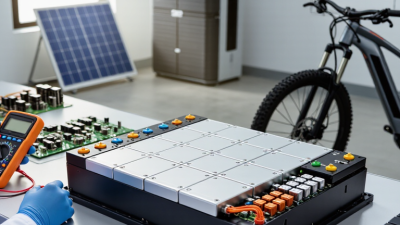
China Top 10 Lithium Ion Battery Pack Manufacturers?

China’s lithium-ion battery industry has become a major force in global energy storage and electric mobility. Its manufacturers serve electric vehicles, portable electronics, industrial equipment, solar systems, and specialized machinery. This guide examines ten notable Chinese lithium ion battery pack manufacturers through practical, verifiable criteria.

The evaluation considers production capacity, cell sourcing, battery management systems, thermal control, safety testing, customization, and export experience. A strong supplier should provide clear technical documents, traceable materials, stable quality control, and responsive engineering support. Factory scale matters, but it does not tell the whole story. A smaller specialist may deliver better communication or more flexible pack designs.

Performance must match the application. A delivery vehicle needs reliable cycle life and vibration resistance. A warehouse system may require high discharge efficiency and remote monitoring. Certifications, inspection records, sample testing, and warranty terms also deserve careful review. These details often reveal more than polished marketing claims.

No ranking is permanent. Market conditions change. Company capabilities can also vary between facilities and product lines. This article therefore presents a research-based starting point, not an unquestionable verdict. Buyers should confirm current specifications, test samples independently, and assess compliance requirements in their destination markets. Practical evidence remains essential. A battery pack may look excellent on paper, yet perform differently under heat, cold, heavy loads, or daily charging. Careful comparison helps businesses identify manufacturers that combine engineering competence, dependable production, and long-term service.

China Top 10 Lithium Ion Battery Pack Manufacturers?

What Defines a Lithium-Ion Battery Pack Manufacturer?

China Top 10 Lithium Ion Battery Pack Manufacturers?

A lithium-ion battery pack manufacturer does more than assemble cells in a workshop. It designs, tests, documents, and supports a complete energy system. Engineers should match cell chemistry, capacity, discharge rate, and operating temperature to the application. A pack for an electric tool needs different protection than one used in medical equipment.

Good engineering shows in small details. Cell matching should include voltage, capacity, and internal resistance checks. The battery management system must monitor temperature, overcharge, over-discharge, and short-circuit risks. Reliable factories also use controlled welding, insulation checks, and end-of-line performance tests. Traceable serial numbers matter. They connect each pack with its materials, test records, and production date.

Real manufacturing experience is equally important. A capable supplier can explain failure patterns from field data, not only repeat catalog specifications. It should provide clear drawings, sampling procedures, quality reports, and realistic warranty terms. Communication during design changes also reveals technical maturity. No factory is flawless. Some test plans look complete but miss vibration, moisture, or aging conditions. That deserves careful questioning. The strongest manufacturers accept review, correct weak procedures, and improve production based on evidence. Their authority comes from repeatable results, qualified personnel, transparent records, and dependable after-sales support. Tokens of quality are not enough. Performance must remain stable after repeated charging, transport, and daily use.
How China’s Battery Pack Manufacturing Industry Is Organized

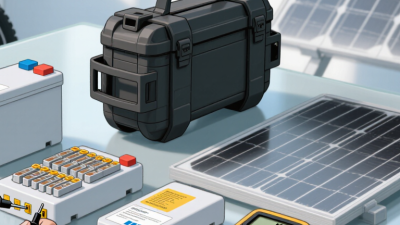
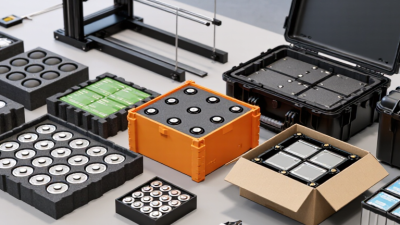
China’s “top ten” battery pack manufacturers operate inside a layered industrial network, not a simple ranking. The Ministry of Industry and Information Technology reported that China’s lithium-ion battery output exceeded 940 GWh in 2023. That scale supports regional clusters for cathode materials, anodes, cells, modules, pack assembly, and recycling. The IEA’s Global EV Outlook 2024 estimated that China held around 75% of global battery cell manufacturing capacity. Cell producers supply vehicle makers, energy-storage developers, and independent pack integrators. The boundaries overlap.

A typical pack line receives cells, checks voltage and internal resistance, then joins modules with busbars and laser welds. Workers install a battery management system, temperature sensors, cooling plates, fuses, and a sealed enclosure. Final tests examine insulation, vibration, thermal behavior, charge-discharge cycles, and software fault responses. According to BloombergNEF’s 2024 Battery Price Survey, average pack prices fell to 115 dollars per kWh globally. Chinese pack prices were lower, at roughly 94 dollars per kWh, reflecting scale and dense supplier networks. Yet price is not the whole story. A pack assembler may outsource cells, software, or thermal parts, making quality responsibility harder to trace. That weakness deserves more attention. Procurement teams should inspect test records, batch traceability, warranty assumptions, and recycling arrangements, not only production volume.

China’s Lithium-Ion Battery Pack Manufacturing Industry

China’s battery-pack industry is mainly organized around large-scale cell production, pack integration, and application-specific systems for electric vehicles and energy storage.

In 2023, lithium iron phosphate accounted for approximately 261.0 GWh, or 67.3%, of China’s installed power-battery capacity, while ternary batteries accounted for approximately 126.2 GWh, or 32.6%. The figures illustrate the dominant role of LFP-based pack systems in China’s electric-vehicle battery market.

Criteria for Ranking China’s Top Battery Pack Manufacturers

Ranking China’s top lithium-ion battery pack manufacturers requires more than comparing factory size or export volume. A reliable assessment starts with cell quality, pack architecture, and battery management system performance. Engineers should review charging controls, thermal protection, balancing accuracy, and communication protocols. Evidence matters.

Manufacturing consistency deserves close attention. Review automated welding records, incoming cell inspection, torque controls, and end-of-line testing. A serious manufacturer can provide traceability from individual cells to finished packs. Independent laboratory reports add confidence, especially for vibration, temperature cycling, short-circuit protection, and repeated charge-discharge testing. Field experience also matters. Ask how suppliers handle failed units, warranty claims, and software updates.

Ranking should include customization and long-term support, not only price. The best candidates explain capacity tolerance, operating temperature limits, storage conditions, and expected cycle life in practical terms. They should disclose test methods instead of using impressive but vague figures. Public information can be incomplete, and factory audits may show only one production period. That is imperfect. Customer references, sample testing, and follow-up inspections can reduce this uncertainty. A fair ranking also considers delivery stability, documentation quality, worker training, and the manufacturer’s willingness to discuss design limitations. Reliability is built through evidence, not polished promises.

China Top 10 Lithium Ion Battery Pack Manufacturers? - Criteria for Ranking China’s Top Battery Pack Manufacturers

A transparent, brand-neutral evaluation framework for lithium-ion battery pack manufacturers

Rank Evaluation Criterion Weight What Should Be Measured Verification Method Why It Matters
1 Manufacturing Capability 20% Production capacity, automation level, process control, and ability to support stable volume delivery. Factory audit, production records, equipment review, and sample order performance. Strong manufacturing systems improve consistency, scalability, and delivery reliability.
2 Battery Pack Safety 18% Cell matching, insulation, thermal protection, overcharge protection, short-circuit protection, and fire-safety design. Design review, safety testing, protection-circuit inspection, and certification documentation. Safety is the primary requirement for stationary, industrial, mobility, and commercial battery applications.
3 Quality Management 15% Traceability, incoming inspection, in-process testing, final inspection, defect control, and corrective-action procedures. Quality-system audit, inspection reports, traceability records, and nonconformance analysis. A mature quality system reduces field failures and improves long-term product dependability.
4 Engineering and Customization 12% Electrical and mechanical design, BMS integration, enclosure development, firmware support, and prototype capability. Review of engineering resources, development process, prototypes, drawings, and validation reports. Customization is essential when voltage, capacity, dimensions, communications, or operating conditions are application-specific.
5 Testing and Certification 10% Electrical, mechanical, environmental, transportation, EMC, and regulatory testing relevant to the target market. Independent laboratory reports and certificates such as UN 38.3, IEC, UL, CE, or applicable national standards. Verified compliance supports legal market access, safe transportation, and customer approval.
6 Cell and Component Sourcing 8% Cell quality, supplier qualification, component consistency, approved vendor controls, and supply continuity. Supplier audits, cell test data, incoming inspection records, and supply-chain documentation. Reliable sourcing helps maintain pack performance, availability, and production stability.
7 Performance and Service Life 7% Usable energy, power output, cycle life, charging performance, operating temperature range, and self-discharge. Controlled laboratory testing, product data sheets, endurance tests, and application validation. Measured performance shows whether the pack can meet its intended operating profile over time.
8 Delivery and Supply Reliability 5% Lead time, on-time delivery rate, production planning, inventory management, and export capability. Purchase-order history, logistics records, planning procedures, and customer references. Predictable delivery reduces project delays and protects production schedules.
9 After-Sales Support 3% Warranty policy, technical response time, spare-parts support, troubleshooting, and failure-analysis capability. Warranty terms, service-level agreements, support records, and customer feedback. Responsive service lowers downtime and improves the total ownership experience.
10 Commercial Competitiveness 2% Total cost of ownership, minimum order quantity, payment terms, warranty coverage, and value-added services. Comparable quotations, lifecycle-cost analysis, contract review, and warranty evaluation. The lowest purchase price does not always represent the best long-term value.
Recommended Ranking Principle: Manufacturers should be ranked by verified evidence rather than marketing claims. Each criterion can be scored from 0 to 100, multiplied by its assigned weight, and added to produce a final score out of 100.

Profiles of China’s Top 10 Lithium-Ion Battery Pack Manufacturers

China’s top ten lithium-ion battery pack manufacturers differ in scale, engineering focus, and market experience. One profile specializes in electric vehicles, with automated welding lines and thermal testing chambers. Another serves electric buses, where vibration resistance and rapid charging matter daily. A third focuses on energy storage packs, using rack-mounted systems for homes, factories, and remote facilities.

A fourth manufacturer develops compact packs for medical equipment and portable instruments. Its work requires stable output, quiet operation, and strict traceability. The fifth supplies power packs for warehouse vehicles, emphasizing cycle life and quick battery replacement. A sixth builds packs for two-wheel mobility, with sealed housings and protection against rain and road dust. The seventh combines cells, battery management systems, and custom communication interfaces for industrial equipment.

The remaining profiles include a manufacturer serving robotics, another supporting solar storage projects, and a specialist producing low-volume prototypes. The tenth focuses on export-oriented customization, including enclosure design, connector selection, and documentation. Reliable manufacturers usually provide capacity reports, safety test records, sample validation, and production inspection data. Engineers should also examine cell consistency, balancing performance, thermal behavior, and warranty conditions. Some published capacity figures may look impressive, but real results depend on temperature, discharge rate, and installation quality. Factory visits can reveal details that brochures miss, such as cable routing, labeling discipline, and unfinished quality checks. Mistakes still happen. Careful buyers leave room for independent testing before large orders.

Applications, Certifications, and Global Supply Capabilities

China Top 10 Lithium Ion Battery Pack Manufacturers: Applications, Certifications, and Global Supply Capabilities

A credible top-ten assessment should examine more than annual output. It should measure application experience, cell traceability, safety testing, and overseas delivery performance. The International Energy Agency reported that global electric-vehicle battery demand exceeded 750 GWh in 2023. China supplied about 60% of global electric-car battery demand, showing its manufacturing depth and export influence.

Leading pack manufacturers serve electric vehicles, energy storage systems, industrial equipment, telecom backup, and medical devices. Each application needs different protection settings, thermal controls, and communication protocols. For international projects, buyers commonly request UN 38.3 transport testing, IEC 62619 industrial battery compliance, and UL 1973 certification for stationary storage. Automotive suppliers may also need IATF 16949, ISO 9001, and ISO 14001 systems. Certification is useful evidence, not a guarantee.

Global supply capability depends on more practical details. Can the supplier provide English technical files, stable spare parts, remote diagnostics, and documented warranty procedures? Multi-region warehouses can reduce delays, while batch-level QR traceability supports recalls and quality investigations. The IEA also reported strong growth in battery storage deployments during 2023, increasing demand for safer, longer-duration systems. Public shipment figures can lag factory reality. Rankings are never permanent. Some suppliers still publish limited data, which deserves careful review. A factory visit, sample validation, and third-party testing remain wise steps before large orders.