Demand for large capacity lithium ion battery systems is accelerating across electric vehicles, grid storage, commercial equipment, and industrial mobility. The International Energy Agency reported that global electric vehicle battery demand exceeded 750 GWh in 2023, rising by about 40% year on year. This growth is expanding the market for high-energy cells, large-format modules, and containerized battery systems.
Scale alone does not identify the strongest supplier. BloombergNEF’s 2024 Battery Price Survey placed the average lithium-ion battery pack price at $115 per kWh, showing continued cost pressure across the industry. Meanwhile, suppliers must manage thermal safety, cycle life, charging performance, traceability, and recycling responsibilities. The Top 10 list therefore considers manufacturing capacity, technology maturity, international delivery experience, chemistry options, certifications, and documented customer support.
Evidence matters more than impressive brochures. Shipment figures can differ between company disclosures and independent research. That is the uncomfortable part. A supplier may lead in electric vehicle cells but offer limited experience with stationary storage. Another may provide excellent safety testing while serving fewer global markets. These differences deserve careful review.
The selected companies represent major participants in the large capacity lithium ion battery supply chain. Their positions should not be treated as permanent. Prices, raw-material costs, factory expansions, and new sodium-ion or solid-state technologies may change the ranking quickly. Buyers should verify current specifications, warranty terms, testing records, and regional compliance before making procurement decisions. Reliable data remains essential.
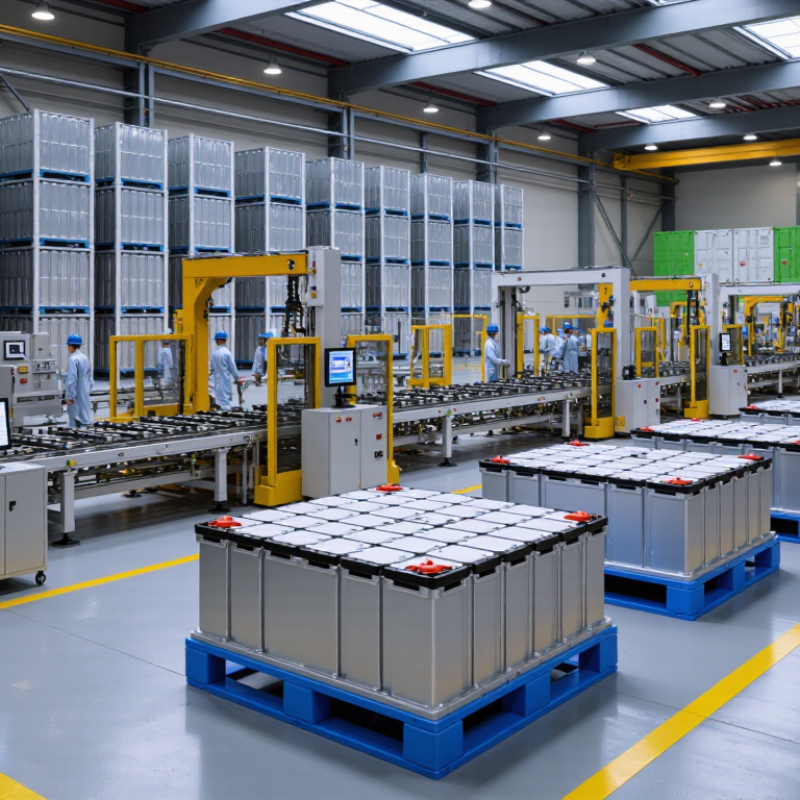
Definition and Scope of Large-Capacity Lithium-Ion Batteries
Large-capacity lithium-ion batteries store substantial energy in cells, modules, or complete packs. However, the industry has no universal capacity threshold. A 100 Ah cell may be large for portable equipment, yet modest for an electric vehicle pack. Capacity is calculated by multiplying nominal voltage by ampere-hours, then dividing by 1,000. The result is measured in kilowatt-hours.
The scope usually includes high-capacity cells, vehicle battery packs, and stationary energy-storage systems. These products require stronger thermal management, mechanical protection, and battery-management controls. According to the International Energy Agency’s Global EV Outlook 2024, global electric-vehicle battery demand exceeded 750 GWh in 2023. That figure shows how quickly large-format battery applications are expanding. BloombergNEF reported that average lithium-ion pack prices fell to about 139 dollars per kWh in 2023. Price matters, but usable energy, cycle life, and safety remain equally important.
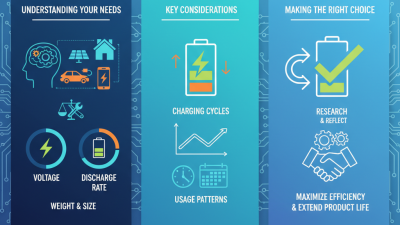
Tips: Compare usable capacity, not only rated capacity. Check operating temperature, warranty cycles, charging limits, and certification records. Ask whether the quoted capacity applies to the cell or the entire pack. A neat cutoff sounds helpful, but it can mislead. Real purchasing decisions need application-specific testing.
Industry-based supplier profiles and representative large-capacity battery specifications
| Rank | Supplier Profile | Common Chemistry | Typical Capacity Range | Nominal Voltage | Typical Cycle Life | Primary Applications | Typical Compliance Requirements |
|---|---|---|---|---|---|---|---|
| 1 | Utility-scale energy-storage cell supplier | LFP | 280–600 Ah per prismatic cell; 1–5 MWh per container system | 3.2 V per cell; 600–1,500 V DC system | 4,000–10,000 cycles | Grid balancing, renewable-energy storage, peak shaving, and microgrids | UN 38.3, IEC 62619, UL 1973, UL 9540, UL 9540A, NFPA 855 |
| 2 | Electric-vehicle prismatic battery supplier | LFP / NMC | 100–300 Ah per cell; 30–120 kWh per vehicle pack | 3.2–3.7 V per cell; 400–900 V pack | 1,500–3,000 cycles | Passenger vehicles, commercial vans, buses, and electric trucks | UN 38.3, IEC 62660, ISO 6469, GB/T or equivalent automotive requirements |
| 3 | Commercial and industrial battery-system supplier | LFP | 100–280 Ah per cell; 50–500 kWh per cabinet or system | 48–1,000 V DC | 4,000–8,000 cycles | Factories, data centers, commercial buildings, and backup power | IEC 62619, IEC 63056, UL 1973, UL 9540, EMC and transportation testing |
| 4 | Large-format cylindrical-cell supplier | NMC / NCA / LFP | 30–80 Ah per large cylindrical cell; 20–100 kWh per pack | 3.2–3.7 V per cell; 400–900 V pack | 1,500–3,500 cycles | Electric vehicles, industrial mobility, and high-power battery packs | UN 38.3, IEC 62660, ISO 26262, ISO 6469, and regional vehicle regulations |
| 5 | Marine and vessel battery supplier | LFP / NMC | 100–400 Ah per module; 50–2,000 kWh per vessel system | 48–1,000 V DC | 2,000–6,000 cycles | Electric boats, ferries, hybrid vessels, and marine auxiliary power | UN 38.3, IEC 62619, IEC 60533, marine classification rules, IP-rated enclosure testing |
| 6 | Heavy-duty commercial vehicle battery supplier | LFP / NMC | 150–600 Ah per module; 100–800 kWh per vehicle | 400–1,000 V DC | 1,500–3,000 cycles | Electric buses, trucks, mining vehicles, and off-highway equipment | UN 38.3, IEC 62660, ISO 26262, ISO 6469, vibration and mechanical-shock testing |
| 7 | Telecom and data-center backup battery supplier | LFP | 100–300 Ah per module; 5–200 kWh per cabinet | 48 V or 336–512 V DC | 3,000–6,000 cycles | Telecom towers, uninterruptible power supplies, and edge data centers | IEC 62619, IEC 63056, UL 1973, UL 9540, EMC and fire-safety requirements |
| 8 | Residential energy-storage battery supplier | LFP / NMC | 100–280 Ah per cell; 5–40 kWh per home system | 48–500 V DC | 3,000–8,000 cycles | Solar self-consumption, backup power, and time-of-use energy management | UN 38.3, IEC 62619, IEC 63056, UL 9540, UL 9540A, local grid-interconnection rules |
| 9 | Low-speed electric mobility battery supplier | LFP / NMC | 100–300 Ah per module; 5–80 kWh per vehicle | 24–800 V DC | 1,500–4,000 cycles | Forklifts, golf carts, utility vehicles, scooters, and warehouse equipment | UN 38.3, IEC 62619, IEC 62133 where applicable, vibration and ingress-protection testing |
| 10 | Specialized aerospace and defense battery supplier | NMC / LCO / LFP | 100–250 Ah per module; application-specific pack sizes | 24–800 V DC | 500–3,000 cycles | Unmanned systems, aerospace ground equipment, military vehicles, and mission-critical backup | UN 38.3, RTCA DO-311A where applicable, MIL-STD environmental testing, IEC 62619 |
Note: The ranking represents major supplier segments by typical market demand, production scale, and application coverage rather than named companies. Capacity, voltage, cycle life, and compliance requirements are representative industry ranges and should be confirmed against the supplier’s current technical datasheet and certification documentation.