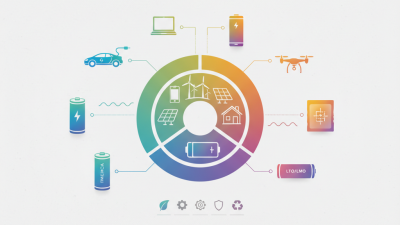
Choosing lithium battery cells for global markets requires more than comparing price per ampere-hour. Buyers must match chemistry, capacity, voltage, cycle life, dimensions, and operating temperature with the final product. A cell that performs well in a warehouse may struggle inside a hot electric vehicle cabinet.
The International Energy Agency reported in Global EV Outlook 2024 that electric vehicle battery demand exceeded 750 GWh in 2023, rising by about 40% year on year. This growth increases purchasing opportunities, but it also exposes quality differences between manufacturers. BloombergNEF’s 2024 Battery Price Survey reported an average battery pack price of 115 US dollars per kilowatt-hour. Cell pricing varies widely, however, because raw materials, production yield, warranty terms, and testing standards differ. Cheap is not always efficient.
Experienced buyers should request independent test reports, production traceability, batch records, and clearly stated safety data. They should verify capacity at the declared discharge rate, not only at laboratory-friendly conditions. For international shipments, suppliers should provide evidence of applicable transport testing, including UN 38.3 documentation. Industrial applications may also require evaluation against standards such as IEC 62619, depending on the product and destination.
Small details matter. Check terminal welding. Inspect swelling data. Review sample consistency.
A practical sourcing process combines supplier audits, sample testing, and controlled pilot orders. No spreadsheet captures every failure mode. I have seen specifications look perfect until temperature testing reveals rapid capacity loss. Global buyers should therefore judge lithium battery cells by verified performance, safety controls, documentation quality, and long-term supplier reliability—not by headline capacity alone.
How to Choose Lithium Battery Cells for Global Buyers?
Lithium battery cells differ in chemistry, shape, energy density, and safety behavior. Lithium iron phosphate (LFP) cells suit buses, solar storage, and backup systems. They offer strong thermal stability and long cycle life, but their energy density is lower. Nickel manganese cobalt (NMC) cells provide more energy in a smaller space. They fit electric tools, mobility devices, and compact vehicles. Lithium cobalt oxide cells are lightweight, yet their heat tolerance requires careful protection and monitoring.
Form also affects the final product. Cylindrical cells are consistent and mechanically durable. Prismatic cells use space efficiently inside larger battery packs. Pouch cells are light and flexible, but they need firm compression and reliable sealing.
Global buyers should review operating temperature, discharge rate, cycle requirements, transport conditions, and available test records. Capacity labels alone are not enough. An experienced buyer should request sample testing, traceability documents, and independent safety verification.
Tips: Match chemistry to the application, not the advertised capacity. Check cell voltage under real loads. Ask how capacity was measured. Inspect weld quality and insulation. I once treated a low price as a useful advantage; later, inconsistent performance made the purchase expensive. That mistake still matters. A careful comparison should include aging data, warranty terms, production controls, and compliance with destination-market requirements. Small details can change pack reliability.
How to Choose Lithium Battery Cells for Global Buyers?
Cell selection begins with the load, not the catalogue. Capacity means usable energy, not only ampere-hours. A 100 Ah cell rated at 3.2 V stores about 320 Wh nominally. Real output falls after temperature, ageing, and reserve limits are considered. Define daily energy, peak current, cycle count, operating temperature, and physical space. A spreadsheet can still mislead.
Voltage must match the system and its battery-management system. Confirm nominal, charging, and cut-off voltage ranges. Lithium iron phosphate cells usually use about 3.2 V nominal voltage. Nickel-based chemistries commonly use about 3.6–3.7 V. These figures are not interchangeable. The International Energy Agency reported that LFP batteries represented nearly 40% of the global electric-car market in 2023, about three times their 2020 share. That growth reflects cost and safety advantages, but energy density may be lower.
Performance claims require test conditions. Ask for capacity at a stated current, temperature, and cut-off voltage. Check internal resistance, pulse capability, cycle-life definition, and ageing data. A “4,000-cycle” claim may mean 80% remaining capacity under gentle laboratory conditions. Not the same as field use. BloombergNEF reported an average lithium-ion pack price of 115 US dollars per kWh in 2024, yet cells, testing, logistics, and protection electronics create different purchasing costs. Independent sampling, traceable test reports, and recognized safety standards reduce uncertainty. The cheapest cell is often only cheaper on paper.
Defining capacity, voltage, chemistry, and performance requirements
LFP is typically 3.2 V per cell; NMC and NCA are about 3.6 V; LCO is about 3.7 V.
Required capacity in ampere-hours can be estimated as: Ah = required energy in Wh ÷ nominal voltage.
Choose higher cycle life for frequent daily use and higher specific energy when weight and size are the main constraints.
Representative chemistry-level engineering values. Actual performance depends on cell format, electrode design, temperature, charge rate, discharge depth, and operating conditions. Cycle life refers approximately to the point at which capacity reaches 80% of the initial rating.
Global buyers should treat certification as evidence, not a substitute for technical due diligence. The IEA’s Global EV Outlook 2024 reports that electric-vehicle battery demand exceeded 750 GWh in 2023, rising about 40% from 2022. This scale increases pressure on suppliers, especially when production expands faster than process control. Check whether cells meet IEC 62619 for industrial applications or IEC 62133-2 for portable products. UN 38.3 is essential for transport testing, but it is not a complete cell safety certification. That distinction is often missed.
Look deeper. During supplier reviews, request batch-level capacity data, internal-resistance records, formation curves, and traceability from electrode coating to shipment. A reliable factory should explain its sampling plan and corrective-action process. Inspect how it controls moisture, welding quality, separator damage, and storage temperature. These details can reveal more than a polished certificate. BloombergNEF’s 2024 Battery Price Survey placed the average lithium-ion pack price at 115 dollars per kWh, showing intense cost pressure across the market. Low prices are not automatically dangerous, but unexplained discounts deserve questions. Ask for accredited laboratory reports, calibration records, and current audit dates. ISO 9001 supports management discipline, yet it does not prove cell performance. A certificate alone is not proof. Some documents may be genuine but outdated, incomplete, or issued for another model. Buyers should compare serial numbers, test samples, and declared chemistry before approving a purchase. Mistakes still happen, even with experienced teams. That is why independent retesting remains worthwhile.
Global battery demand is expanding quickly. The IEA reported over 750 GWh of electric vehicle battery demand in 2023. BloombergNEF’s 2024 Battery Price Survey placed average lithium-ion pack prices at 115 dollars per kWh. These figures explain the pressure on buyers. Low prices alone do not prove reliable cells.
Compare suppliers through evidence, not polished quotations. Request production dates, chemistry, rated capacity, DC internal resistance, cycle-life conditions, and traceability records. Ask for samples from several lots. Test at least capacity, voltage consistency, DCIR, dimensions, leakage, and self-discharge. Use the same temperature and charging protocol for every supplier. Small differences become important in large battery packs.
A factory sample can look excellent. Production consistency is harder. Review statistical process control charts and recent nonconformance records. Check whether the supplier measures capacity by cell, batch, or average. Require certificates linked to recognized standards, including IEC 62619 and UN 38.3 where applicable. An independent laboratory can repeat critical tests. Do not trust one successful batch. A practical audit should inspect raw-material controls, formation rooms, aging time, and warehouse humidity. No checklist is perfect. I once treated identical labels as evidence of identical performance; that assumption was weak. Build acceptance limits before purchasing, then compare delivered cells against those limits.
How to Choose Lithium Battery Cells for Global Buyers?
Choosing lithium battery cells requires more than comparing price per amp-hour. Chemistry affects usable energy, safety margins, temperature performance, and service life. In practical sourcing reviews, the lowest quote often excludes testing, protective packaging, customs handling, or rejected-cell costs. Plan the full landed cost. Include sampling, inspection, freight, insurance, duties, storage, and possible delays. A small price difference can disappear at the port.
Tips: Request recent test reports and production records. Confirm capacity, internal resistance, cycle-life data, and batch consistency. Check whether cells meet applicable transport and safety requirements, including UN 38.3 and relevant IEC standards. Ask for correctly prepared shipping documents. Also verify local import rules before placing an order. Requirements can differ between destination countries. They may change during a project.
Logistics planning should match the cell format and shipment volume. Temperature exposure matters, especially during long warehouse stays. Use traceable batch codes and define acceptance limits before production. For long-term supply, assess manufacturing capacity, raw-material risks, quality-control procedures, and backup production options. A written change-notification process is essential. Cell specifications may drift quietly. That is a risk. Avoid relying on one forecast or one supplier commitment. A two-source strategy can improve resilience, although it adds qualification costs and engineering work. I would also leave room for imperfect demand estimates. Real projects rarely follow the first spreadsheet.