Top Types of Lithium Battery Cells for Efficient Energy Storage?
In the rapidly evolving world of energy storage, lithium battery cells have emerged as a leading technology. Their efficiency and versatility make them vital for powering everything from smartphones to electric vehicles. This article explores the top types of lithium battery cells that are driving innovation in energy storage.
Lithium-ion cells dominate the market. They offer excellent energy density and longevity. However, not all lithium battery cells are created equal. Different chemistries, like LFP and NMC, cater to specific applications. Understanding these differences can help users make informed choices.
While lithium battery cells provide numerous advantages, they also have drawbacks. For instance, charging speed can vary significantly among different types. This inconsistency may lead to slower performance in some scenarios. A deeper understanding of these battery types enhances decision-making and optimizes energy storage solutions.

Overview of Lithium Battery Cell Types for Energy Storage
Lithium battery cells are pivotal for efficient energy storage. Their varying chemistries and geometries suit different applications. Among the most common types are Lithium Nickel Manganese Cobalt (NMC) and Lithium Iron Phosphate (LFP) cells. NMC cells provide high energy density, making them ideal for electric vehicles. According to industry reports, NMC batteries offer up to 250 wh/kg. They deliver great performance, but they come with higher production costs.
On the other hand, LFP cells focus on safety and longevity. They have a lower energy density of about 160 wh/kg. However, LFP cells excel in thermal stability and cycle life. Research indicates that LFP batteries can last over 3,000 cycles. These features attract applications in stationary energy storage. However, their lower energy density raises questions about space and weight constraints in some designs.
Other emerging technologies include lithium-sulfur batteries. They promise high theoretical energy densities up to 500 wh/kg. Yet, commercial viability still faces challenges. Engineers work diligently to improve cycle stability and lifespan. Each type of lithium battery has strengths and weaknesses, emphasizing the importance of choosing the right cell for specific energy storage needs.
Top Types of Lithium Battery Cells for Efficient Energy Storage
| Cell Type |
Chemistry |
Energy Density (Wh/kg) |
Cycle Life (Cycles) |
Applications |
| Li-ion |
Lithium Cobalt Oxide |
150-200 |
500-1500 |
Consumer Electronics |
| LiFePO4 |
Lithium Iron Phosphate |
90-120 |
2000-5000 |
Electric Vehicles, Energy Storage |
| NMC |
Nickel Manganese Cobalt |
150-220 |
1000-2000 |
Electric Vehicles, Grid Storage |
| LTO |
Lithium Titanate |
70-100 |
3000-7000 |
Fast Charging Applications |
| LFP |
Lithium Iron Phosphate |
90-120 |
2000-4000 |
Renewable Energy Storage |
Characteristics of Lithium-Ion Batteries and Their Applications
Lithium-ion batteries have become the backbone of modern energy storage. Their efficiency and reliability make them ideal for various applications. These batteries feature a high energy density, enabling them to store more power in a compact form. They are lightweight, making them suitable for portable devices and electric vehicles. Moreover, their longevity is a significant advantage. Many lithium-ion batteries can withstand hundreds of charge cycles.
Understanding the characteristics of lithium-ion batteries helps in optimizing their use. They operate well in a wide temperature range, enhancing their versatility. However, overheating can lead to performance issues. Regular battery management is essential to avoid this. Users should also be aware of the degradation over time. Not all lithium-ion batteries perform the same under stress, highlighting the importance of choosing the right type for your needs.
Tip: Always monitor your battery's health. Continuous charging at high temperatures can reduce lifespan.
Another vital aspect is the charging methods. Fast charging can save time but may impact durability. Many users prefer slower, more controlled charging. This approach can help maintain the battery’s integrity longer.
Tip: Use appropriate chargers designed for your battery type. Mismatched chargers can affect performance.
Comparative Analysis of Lithium Polymer vs. Lithium Iron Phosphate Cells
Lithium polymer (LiPo) and lithium iron phosphate (LiFePO4) cells are two popular choices in energy storage. Each cell type has distinct advantages and limitations. LiPo cells are lightweight and have a high energy density, making them suitable for portable devices. However, they also pose safety risks, such as swelling and thermal runaway.
On the other hand, LiFePO4 cells offer excellent thermal stability and a longer life cycle. They are less prone to safety issues compared to LiPo cells. This makes them ideal for applications in electric vehicles and stationary storage systems. Users should consider their specific needs before choosing a type.
**Tips**: Always monitor battery temperatures during charging. Understanding the conditions can prevent potential hazards. Additionally, use proper chargers designed for each battery type to maintain optimal performance and safety. Regular maintenance can extend the life of your cells significantly.
Performance and Efficiency Metrics in Energy Storage Systems
When it comes to energy storage, the performance and efficiency metrics of lithium battery cells play a vital role. These metrics help determine how well a battery can store and release energy. Key metrics include energy density, cycle life, and charge/discharge rates. Energy density indicates how much energy a battery can store in a given volume. A higher energy density means more power could fit into a smaller space, which is particularly beneficial for portable applications.
Cycle life measures how many charge and discharge cycles a battery can endure before its capacity significantly diminishes. It’s essential for assessing longevity in energy storage systems. A battery with a longer cycle life can reduce replacement costs and minimize waste. Charge and discharge rates reflect how quickly a battery can be charged or provide energy. Fast charge times are increasingly important as demand for quick energy replenishment grows.
Tips: Always consider the energy density when selecting a battery for specific needs. A higher energy density can lead to more compact designs. Regularly monitor the cycle life to ensure optimal performance and anticipate replacement needs. Remember, faster isn’t always better; assess if the charge/discharge rates meet your requirements without compromising safety. Balancing these metrics is crucial for sustainable energy solutions.
Top Types of Lithium Battery Cells for Efficient Energy Storage
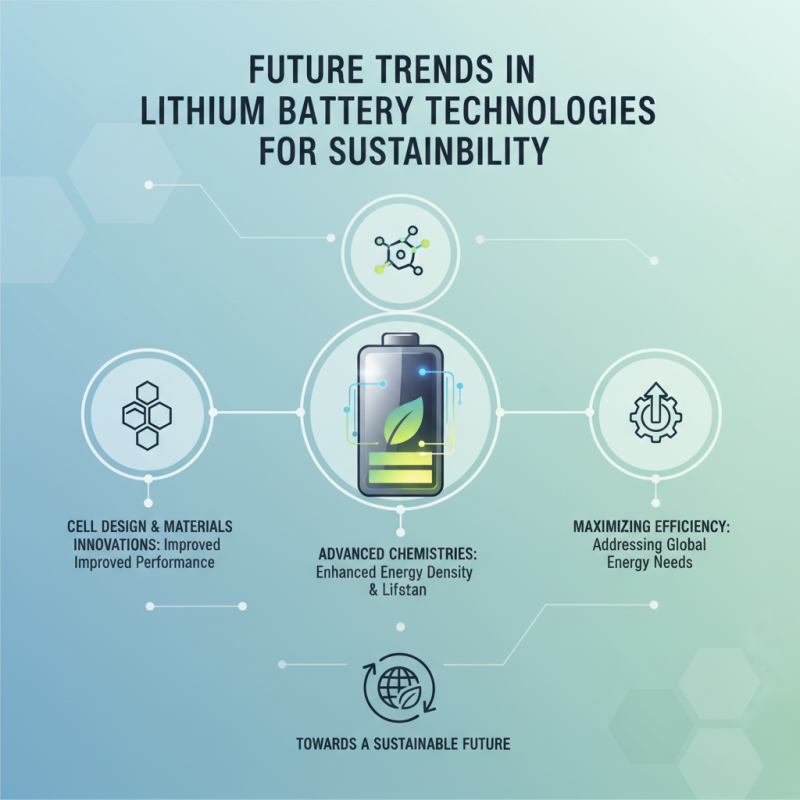
Future Trends in Lithium Battery Technologies for Sustainability
As we move towards a more sustainable future, the demand for efficient energy storage solutions is higher than ever. Lithium battery technologies are at the forefront of this revolution. Innovations in cell design and materials are crucial for improving performance. Researchers explore advanced chemistries to enhance energy density and lifespan. This approach maximizes efficiency and addresses growing energy needs.
Emerging trends indicate a shift towards recycling and repurposing lithium batteries. This practice minimizes waste and promotes sustainability. Battery recycling programs are becoming more established, yet challenges remain. Not all regions have comprehensive systems in place. Together, we can advocate for policies that support these efforts.
The exploration of alternative materials is gaining traction. Solid-state batteries show promise for safety and efficiency. However, hurdles in manufacturing and scalability still exist. The lithium battery landscape is evolving quickly but also requires critical examination. Sustainable solutions must balance performance, cost, and environmental impact. It’s essential to remain vigilant about these factors as we forge ahead.