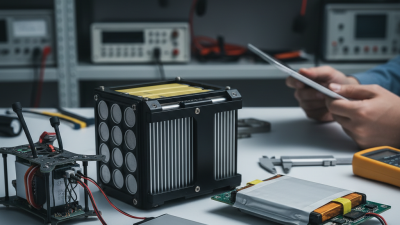
Choosing reliable lithium ion battery cells requires more than comparing price, capacity, or brand recognition. Global buyers must examine chemistry, cycle life, safety controls, production consistency, and technical support. A cell that performs well in a laboratory may behave differently inside an electric vehicle, medical device, or energy storage cabinet. Real purchasing decisions depend on temperature range, discharge demands, shipping requirements, and long-term availability.
Professor John B. Goodenough, a pioneering battery scientist, once said, “The battery is the most important invention of the 20th century.” His words still reflect today’s market. Battery cells power vehicles, tools, backup systems, and many modern devices. Yet the industry is not simple. Manufacturers may publish impressive figures under controlled conditions. Field performance can tell another story.
This guide introduces leading lithium ion battery cells manufacturers for international buyers. It considers manufacturing scale, cell formats, chemistry options, quality systems, testing practices, and customer service. It also highlights practical details, such as batch traceability, electrolyte leakage protection, and stable output during repeated charging. These points matter when thousands of cells operate together.
No ranking is perfect. Buyer needs differ widely. A high-energy cell may not suit a high-power application. A lower-cost supplier may create hidden inspection work. Careful evaluation remains necessary. Readers should verify current certifications, test reports, warranty terms, and regional compliance before making a purchase. The strongest manufacturer is not always the largest one. It is the supplier that consistently matches the application, risk level, and operating environment.
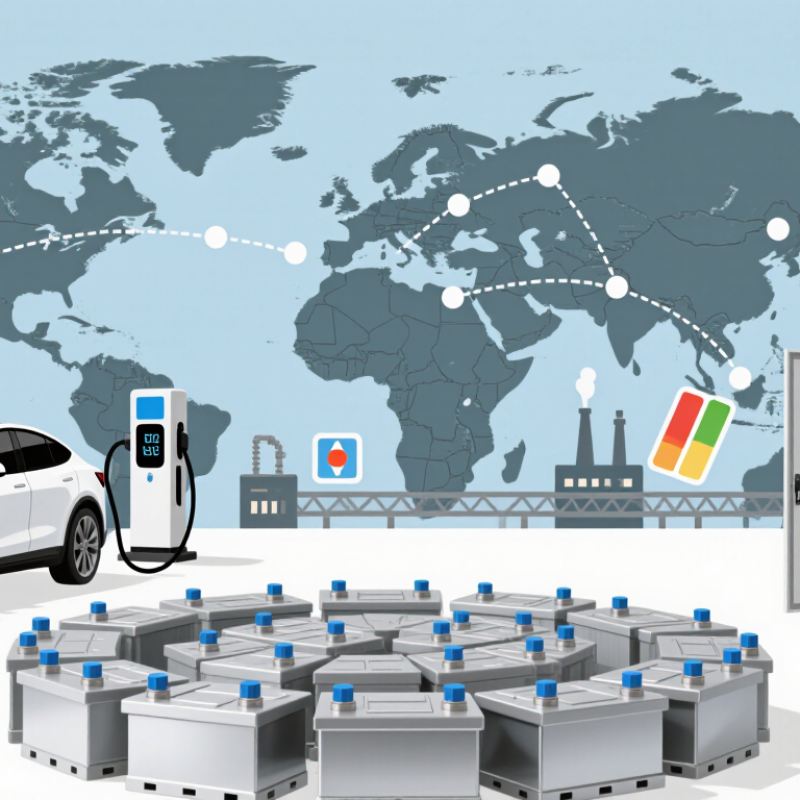
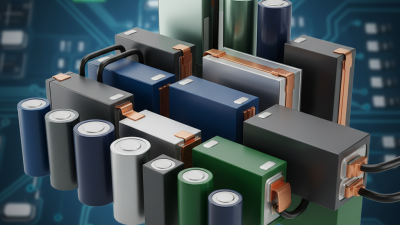
Lithium-ion cells power most modern electric vehicles through controlled movement of lithium ions. A cell contains a cathode, anode, separator, and electrolyte. Its chemistry affects safety, cost, energy density, and cycle life. Common formats include cylindrical, prismatic, and pouch cells. Each suits different vehicle designs and manufacturing systems.
The International Energy Agency reported that global electric-vehicle battery demand reached approximately 750 GWh in 2023, rising about 40% from 2022. This growth increased pressure on cell suppliers, mineral processors, and quality-control teams. Buyers should examine verified capacity, production yield, warranty terms, and traceability. The U.S. Geological Survey also reported major growth in lithium production during 2023, but raw-material expansion does not guarantee stable cell pricing. Forecasts can miss. A spreadsheet cannot reveal every factory delay or thermal issue.
Tips: Request independent test data before approving samples. Check capacity at different temperatures, not only room temperature. Review cycle-life results under realistic charging conditions. Ask whether the quoted output is nameplate capacity or qualified production. Small details matter. A practical audit should also inspect incoming-material controls, separator quality, and battery-management compatibility. These steps help global buyers compare cells beyond headline energy density.
(Sources: IEA, Global EV Outlook 2024; U.S. Geological Survey, Mineral Commodity Summaries 2024.)

For global buyers, battery chemistry often matters more than a manufacturer’s headline capacity. NMC cells provide high energy density, making them suitable for electric vehicles, drones, and compact equipment. A lighter pack can create more space for cargo or cooling hardware. However, NMC chemistry usually requires careful thermal management and strict production controls. In hot warehouses, poor ventilation can increase operating concerns. Buyers should request test data at different temperatures, not only laboratory results.
LFP cells generally offer strong thermal stability, long cycle life, and predictable daily performance. They fit buses, forklifts, stationary storage, and vehicles that can accept extra weight. Their lower energy density may require a larger battery enclosure. That trade-off is easy to underestimate. A pack that looks affordable per cell may need stronger mounting, more floor space, or additional structural support. We have seen purchasing teams compare chemistry only by price, then revise the design after reviewing usable energy and charging patterns. That is not a failure, but it shows why early engineering checks matter.
Cell manufacturers should provide consistent specifications, traceable test records, and clear limits for voltage, temperature, and charging current. Buyers can also examine sample batches before signing large contracts. Energy density is important, but real-world durability, cooling design, warranty terms, and supply consistency often decide the better choice. Some projects still select NMC for its compact size, while others accept LFP’s weight for simpler operation. There is no universal winner.
| Evaluation Dimension | NMC Chemistry | LFP Chemistry | Buyer Interpretation |
|---|---|---|---|
| Cathode composition | Lithium nickel manganese cobalt oxide, commonly written as LiNixMnyCozO2 | Lithium iron phosphate, written as LiFePO4 | Confirm the exact material grade, particle design, coating process, and chemistry variant before comparing supplier quotations. |
| Typical nominal cell voltage | Approximately 3.6–3.7 V | Approximately 3.2–3.3 V | Pack voltage and battery-management-system settings must be designed for the selected chemistry. |
| Typical commercial cell-level energy density | About 180–280 Wh/kg, depending on cell format and NMC formulation | About 140–210 Wh/kg, depending on cell format and design | NMC generally provides more energy per kilogram; actual pack-level density is lower after housing, busbars, cooling, and controls are included. |
| Typical volumetric energy density | Approximately 400–750 Wh/L at cell level | Approximately 250–500 Wh/L at cell level | NMC is usually advantageous when enclosure volume is more constrained than total system weight. |
| Typical cycle-life range to approximately 80% capacity | Approximately 1,000–2,000 cycles under controlled conditions | Approximately 2,000–5,000 cycles under controlled conditions | Cycle life depends strongly on depth of discharge, temperature, charge rate, rest periods, and end-of-life definition. |
| Gravimetric capacity advantage | Higher practical energy storage per kilogram | Lower practical energy storage per kilogram, but often strong usable lifetime energy | Select NMC for weight-sensitive applications; select LFP where longevity and cost stability are higher priorities. |
| Thermal and abuse tolerance | Requires robust thermal management, current control, and protection design | Generally more thermally stable than NMC because of the phosphate cathode structure | Neither chemistry is intrinsically risk-free; pack design, separators, BMS protection, and manufacturing quality remain essential. |
| Low-temperature performance | Generally stronger than LFP at low temperatures, depending on formulation and heating strategy | Can experience greater power and charging limitations in cold conditions | For cold climates, request measured discharge curves, low-temperature charging limits, and heater energy consumption. |
| Raw-material exposure | Uses nickel and usually cobalt; pricing can be more exposed to metal-market volatility | Uses iron and phosphate; avoids nickel and cobalt in the cathode | LFP can provide a more stable material-cost profile, while NMC may justify its premium through higher energy density. |
| Recommended application profile | Electric mobility, premium portable equipment, drones, and systems where weight or volume is critical | Stationary energy storage, commercial vehicles, fleet applications, and high-cycle-duty systems | Match chemistry to the duty cycle rather than selecting solely by initial cell price. |
| Cell formats commonly available | Cylindrical, prismatic, and pouch formats | Cylindrical, prismatic, and pouch formats | Ask for dimensional drawings, terminal specifications, compression requirements, and automated-assembly compatibility. |
| Common quality data to request | Rated capacity, capacity tolerance, DC internal resistance, AC impedance, self-discharge, open-circuit-voltage range, cycle-test report, temperature limits, and sample consistency | Request test conditions and raw batch data; headline specifications without test methodology are not directly comparable. | |
| International compliance checks | UN 38.3 transport testing, IEC 62619 or applicable product standard, safety data documentation, traceability records, and applicable regional regulations | Verify that certificates apply to the exact cell model and production site, not only to a similar product family. | |
| Commercial evaluation metric | Cost per usable kWh may be attractive when weight and volume savings reduce system costs | Cost per lifetime kWh may be attractive because of long cycle life and durable operation | Compare total cost of ownership, warranty conditions, usable energy, replacement intervals, and logistics—not only price per cell. |
Note: Values are typical commercial ranges rather than guarantees. Actual performance varies by electrode formulation, cell format, design capacity, operating conditions, production process, and test protocol.
Global buyers should compare lithium-ion cell manufacturers by verified production capacity, technology, and regional reach. Announced capacity can look impressive, but operating output may be lower. Capacity is not output. Buyers should review shipment records, factory utilization, yield rates, and expansion timelines before signing supply agreements. A mature plant usually offers steadier dimensions, tighter voltage matching, and fewer field failures.
Technology selection depends on the application. Lithium iron phosphate cells suit buses, storage systems, and vehicles requiring long cycle life and thermal stability. Nickel-rich chemistries provide higher energy density but demand stricter thermal control and quality management. Cylindrical, prismatic, and pouch formats also affect pack design, cooling, automation, and repair costs. Newer solid-state concepts remain promising, yet many projects are still in pilot production.
Regional capability matters when logistics, policy, and service response influence total cost. East Asian manufacturing centers retain strong advantages in materials, equipment, and large-scale automation. Europe and North America continue expanding local capacity, often near vehicle and energy-storage markets. Southeast Asia and India are developing additional production hubs. Buyers should inspect local certification, raw-material traceability, warranty support, and emergency response procedures. Data can mislead. Public figures may combine planned, under-construction, and active facilities. An independent factory audit remains valuable, even when the supplier appears technically credible.
Top Lithium Ion Battery Cell Manufacturers for Global Buyers
Global buyers usually compare cells by energy density, cycle life, safety, and cost per kWh. Energy density determines how much power fits inside a limited space. Nickel-rich cells often deliver higher density, which suits electric vehicles and compact equipment. Phosphate-based cells usually offer stronger thermal stability and longer service life. The better choice depends on weight, operating temperature, and available space.
Cycle-life figures need careful reading. A cell rated for 4,000 cycles may reach that number under controlled temperature, moderate charging, and shallow discharge. Real projects can perform differently. Ask for test conditions, capacity-retention data, and batch consistency records. A spreadsheet can still mislead. Practical evaluation should include sample testing, cell matching, and inspection of protection systems.
Cost per kWh should reflect usable energy, not only the factory quotation. Include cooling hardware, battery management systems, shipping, warranty support, and expected replacement costs. A cheaper cell may lose value if its capacity fades quickly. Safety also deserves measurable evidence, including abuse testing, thermal propagation resistance, and traceable quality controls. Review independent laboratory reports where possible. Small gaps between suppliers can become expensive across thousands of cells. Procurement teams should also question unclear claims and request updated data, because specifications sometimes change without obvious notice.
Top Lithium Ion Battery Cell Manufacturers for Global Buyers
For global buyers, compliance documents should be checked before cell prices. UN 38.3 records show whether cells passed transport safety tests, including altitude, vibration, and external short-circuit testing. A test summary is useful, but it is not a complete quality guarantee. Ask for model-specific documents and matching production dates.
IEC 62619 is highly relevant for industrial lithium battery systems. It addresses safety controls, abnormal operation, and cell-level risks. ISO 9001 adds process discipline through documented quality management. However, certification scope matters. Some factories present a valid certificate covering a different site or product category. That detail is easy to miss. The International Energy Agency reported that battery demand in the energy sector reached about 750 GWh in 2023, rising roughly 40% from the previous year. Such rapid growth increases pressure on quality teams and raw-material planning.
Supply security deserves equal attention. Request dual-source material plans, capacity evidence, aging-test records, and written change-control procedures. The IEA’s Global Critical Minerals Outlook 2024 noted that battery supply chains remain geographically concentrated, especially in refining and cell production. One supplier may look stable on paper. Then a port delay changes everything. Buyers should also review warranty reserves, batch traceability, and realistic lead times. Perfect paperwork can still hide weak execution. A factory audit, sample inspection, and small pilot order often reveal more than a polished presentation.