How to Choose the Right Lithium Ion Battery Pack for Your Needs?
Choosing the right lithium ion battery pack can be challenging. Each application requires specific characteristics. Industry expert Dr. Emily Carter emphasizes, "Not all lithium ion battery packs are created equal." This highlights the importance of understanding your unique needs.
Lithium ion battery packs vary in size, capacity, and voltage. For example, portable devices often need lighter packs, while electric vehicles require higher capacity versions. Additionally, usage patterns impact battery life and efficiency. Selecting the wrong type could lead to performance issues or even safety hazards.
Understanding these factors is crucial. Users often overlook details like discharge rates and environmental conditions. Incomplete research can lead to costly mistakes. Evaluating expert opinions alongside technical specifications can guide better decision-making. Remember, the right lithium ion battery pack not only enhances performance but also ensures safety and longevity.

Understanding Lithium Ion Battery Types and Their Applications
When selecting a lithium-ion battery pack, understanding the types is essential. Lithium-ion batteries come in several formulations, each tailored for specific applications. For example, lithium iron phosphate (LiFePO4) batteries offer excellent thermal stability and safety, making them suitable for electric vehicles and energy storage systems. Meanwhile, lithium nickel manganese cobalt oxide (NMC) batteries provide higher energy densities. This characteristic is beneficial for portable electronics and power tools.
Your application should guide your choice. If you need a robust solution for a power-intensive device, NMC may be optimal. For longer cycle lives and safety, consider LiFePO4. While both types have their merits, no battery is perfect. LiFePO4 batteries typically have lower energy density than NMC, limiting their use in compact designs. Conversely, NMC batteries may suffer from thermal runaway risks. Evaluating these downsides is crucial for informed decisions. Understanding these various specifications allows for better alignment with your needs.
Evaluating Capacity and Energy Density for Your Power Needs
When selecting a lithium-ion battery pack, evaluating capacity and energy density is crucial. Capacity refers to the total amount of energy a battery can store, typically measured in ampere-hours (Ah). Higher capacity means longer operational time. For devices requiring extended use, like electric bikes or power tools, a higher capacity is essential. Energy density, on the other hand, measures how much energy a battery can hold in a given weight or volume. This is vital for portable devices where weight matters.
Understanding your power needs is important to avoid disappointment. If a battery’s energy density is too low, it may lead to heavy equipment that’s cumbersome to carry. Conversely, a highly dense battery with inadequate capacity won’t last long, leaving you in a bind. It’s a balancing act. A thoughtful selection can save you time and frustration. Look at how often you’ll use the device and in what conditions. Heavy usage requires more robust options, while light use could afford a less dense battery.
Reflect on this as you evaluate options. Gathering information is essential. Make sure to read reliable sources. Compare specifications and seek insights from user reviews. A battery that performs well for one person may not meet your unique requirements. Determine how you'll use the battery pack before making a decision.
Assessing Discharge Rates and Cycle Life for Longevity
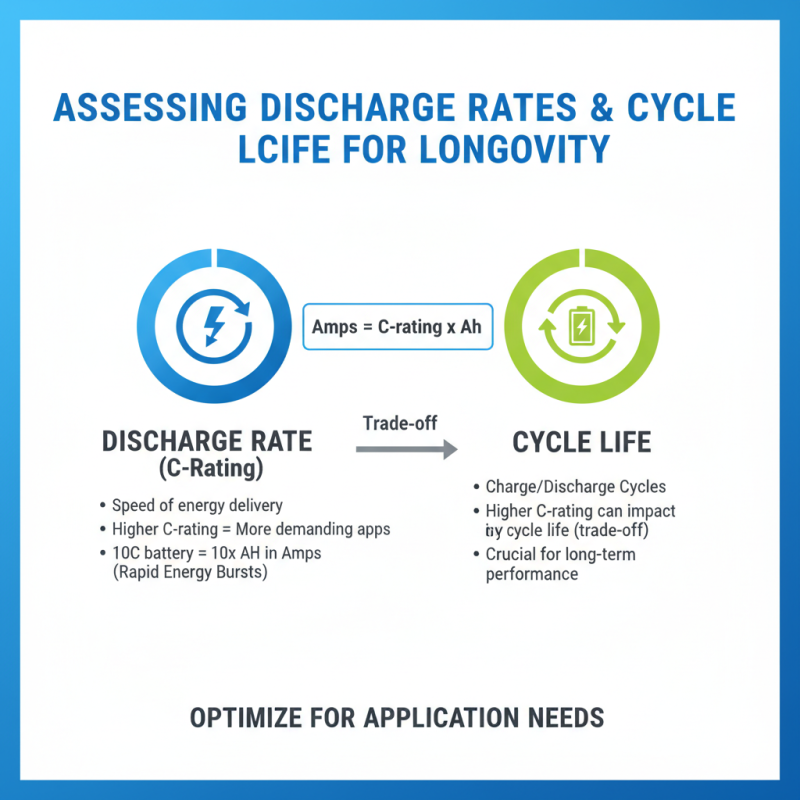
When selecting a lithium-ion battery pack, assessing discharge rates and cycle life is crucial. Discharge rate, expressed in C-ratings, indicates how quickly a battery can deliver energy. A battery with a higher C-rating can support more demanding applications. For instance, a pack rated at 10C can deliver ten times its Ah rating in amps. This is essential for high-power devices needing rapid energy bursts.
Cycle life refers to the number of complete charge-discharge cycles a battery can undergo before significant capacity loss occurs. According to industry reports, typical lithium-ion batteries offer around 500 to 2000 cycles, depending on the chemistry. Factors affecting cycle life include charging habits and temperature extremes. For example, charging at high temperatures can reduce lifespan by 20%. A deeper understanding of these metrics can direct users to a product that genuinely meets their operational needs, sparing them early failure frustrations.
Many users overlook these critical specifications in favor of convenience. This oversight can lead to suboptimal performance. If a battery does not meet the discharge demands of an application, it will underperform. Not considering the environment in which the battery will operate might also shorten its effective life. Data on warranty claims shows many users face issues due to inadequate discharge ratings and short cycle lives. Making informed choices here is essential for long-term satisfaction.
Selecting Charge Times and Charging Protocols for Efficiency
Choosing the right lithium-ion battery pack is critical, especially regarding charge times and charging protocols. Efficient charging can enhance battery lifespan and performance. When selecting a battery, consider your usage scenario. Are you powering lightweight devices or heavy machinery? Each application demands different charge management.
Tips: Investigate faster charging options. Quick charges can cut downtime. However, they may reduce overall battery life. It’s also vital to match your device’s charging requirements. Overcharging or using incorrect settings can lead to safety hazards.
Customizable charging protocols can optimize performance. Some batteries allow users to set charge limits or slow charging modes. This flexibility can help prevent overheating. Regularly check for firmware updates on your devices. These updates can include improvements to charging efficiency, which is often overlooked. Adjust as necessary. Regular monitoring can help identify potential issues early. Be aware of your battery’s behavior. A sudden change in charging time can signal a problem.
Identifying Safety Features and Environmental Impact Considerations
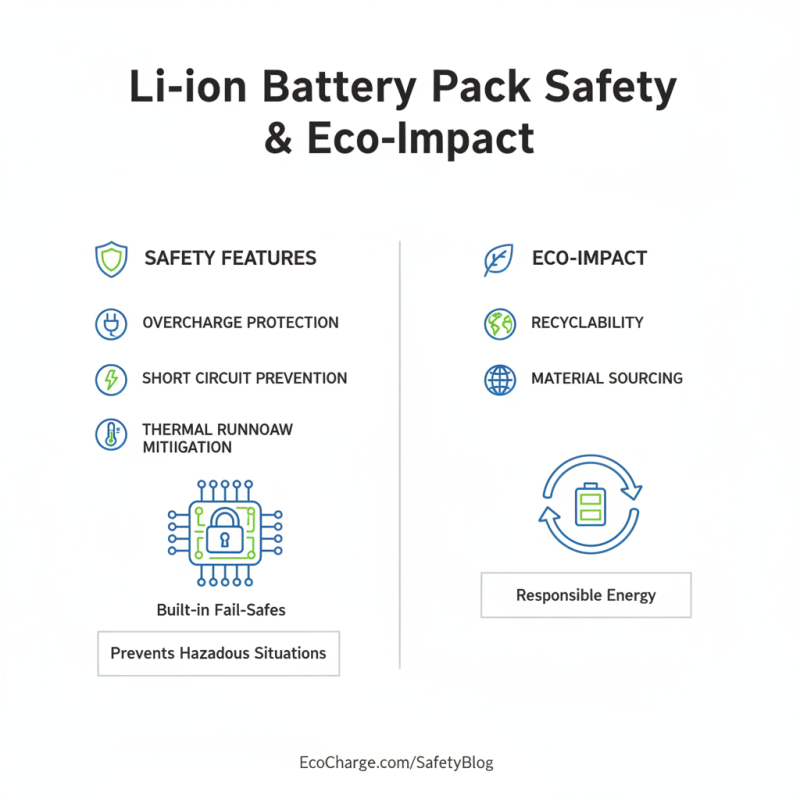
When selecting a lithium-ion battery pack, safety features are paramount. The design should include built-in protection against overcharging, short circuits, and thermal runaway. A well-designed battery can prevent hazardous situations. Quality battery packs often have fail-safes to manage these risks effectively.
Environmental impact is another crucial consideration. Lithium mining poses significant ecological challenges. The extraction process can harm ecosystems and water sources. It's important to consider the source of materials and the sustainability of the production process. Some manufacturers emphasize recycling programs, which can mitigate the negative impact on the environment.
Reflecting on your choice can lead to better outcomes. Are you prioritizing capacity over safety? This might seem efficient but could pose long-term risks. Moreover, consider how often you will need a new battery pack. Choosing longevity over immediate performance may lead to a more sustainable choice. Balancing safety features and environmental impacts is essential for making informed decisions.