How to Choose the Right Power Lithium Battery for Your Needs?
When selecting a power lithium battery, careful consideration is key. Experts in the field emphasize the importance of matching the battery to specific needs. For instance, Dr. Emily Carter, a leading authority in battery technology, states, “Understanding your power requirements can save time and money in the long run.”
Power lithium batteries come with various specifications. Knowing the wattage, cycle life, and size is crucial. A mismatch could lead to inefficiency or even damage. It is tempting to choose the highest capacity available, but this may be unnecessary for some applications.
In addition, finding a reputable manufacturer can be challenging. Many brands overstate their products. Researching customer reviews and certifications may help find trustworthy options. Reflecting on these factors might take time, but the right choice will ultimately enhance performance. Power lithium technology continues to evolve, making the decision process even more complex but rewarding.

Understanding the Basics of Lithium Batteries and Their Chemistry
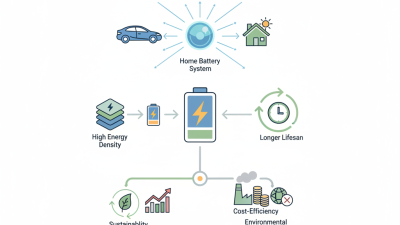
Understanding the chemistry of lithium batteries is crucial for choosing the right one. Lithium-ion batteries are popular due to their high energy density. This means they store more energy in a smaller size. For instance, the energy density of lithium batteries can reach up to 250 Wh/kg. This is significantly higher than that of conventional lead-acid batteries at around 30-50 Wh/kg.
Lithium batteries consist of different materials that affect performance. They typically include a cathode made of lithium compounds and an anode made of graphite. The electrolyte facilitates ion movement, allowing the battery to charge and discharge. Reports indicate that lithium-ion technology has been improving rapidly. The cost per kWh has dropped by more than 85% in the last decade, making them more accessible.
However, not all lithium batteries are the same. Some may not perform well in extreme temperatures, affecting their lifespan. As batteries age, their capacity decreases. Not all manufacturers provide transparent data on cycle life or safety standards. It’s essential to ask questions and seek information before making a decision. Selecting the right battery involves understanding these factors and ensuring they meet your specific needs.
Identifying Your Power Requirements for Specific Applications
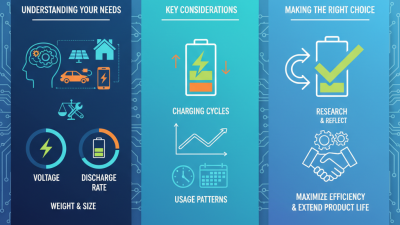
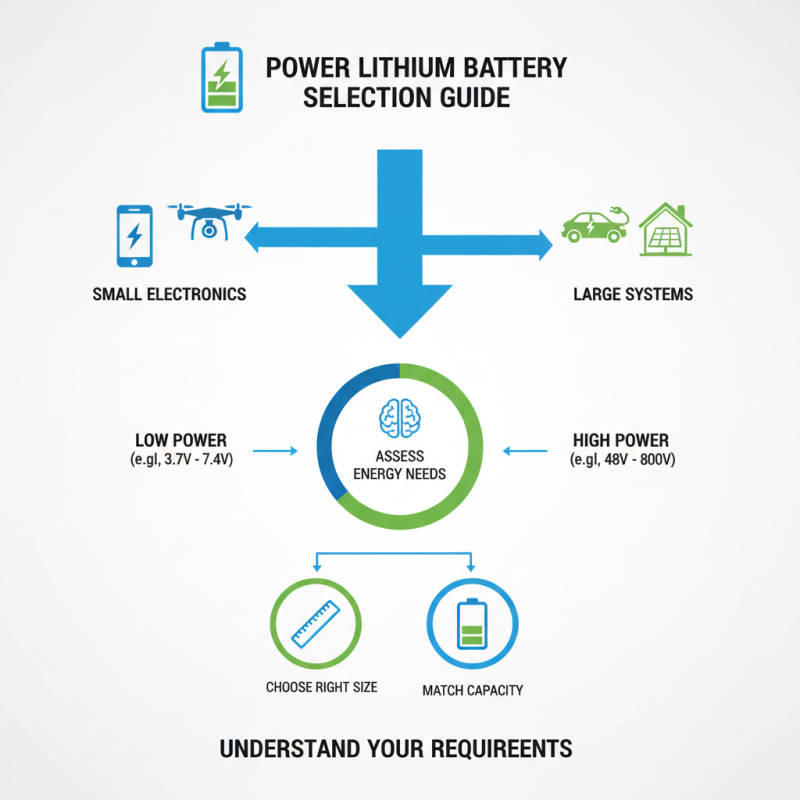
When choosing a power lithium battery, understanding your specific power requirements is essential. Different applications demand varying levels of energy. For instance, a small electronic device might only need a few volts, while larger systems like electric vehicles require significantly more. Take time to assess how much energy your application consumes. This will guide you in selecting the right battery size and capacity.
Consider the discharge rate as well. Some devices need quick bursts of power, while others require a steady supply over long periods. Think about your usage patterns. This reflection will help you determine the ideal battery type. It might seem simple, but many overlook these details. Analyze your actual needs meticulously. The right choice can mean the difference between an efficient system and one prone to failure. Don't rush; take the time to evaluate all your possible energy demands thoroughly.
Evaluating Battery Capacity and Voltage for Optimal Performance
When selecting a power lithium battery, evaluating capacity and voltage is crucial. Battery capacity is typically measured in amp-hours (Ah) or milliamp-hours (mAh). A smaller device may require a capacity as low as 2,000 mAh. Meanwhile, larger applications, such as electric vehicles, often demand capacities exceeding 100,000 mAh. This variation underlines the importance of understanding specific energy needs for optimal function.
Voltage is another key factor. Common lithium batteries operate at 3.7 volts, but some applications might require batteries with higher or lower voltage levels. Mismatched voltage can lead to poor performance or battery damage. For instance, a drone may require a 14.8V battery for peak efficiency. Inconsistent voltage levels often result in rapid depletion or overcharging, calling for careful consideration during selection.
Potential flaws in understanding these parameters can lead to inefficient power usage. Many users might overlook capacity calculations, leading to decisions based on price rather than performance. A report from the Battery Research Institute highlights that 30% of users fail to analyze their energy requirements adequately. Such oversights can diminish device functionality and lifespan. Assessing both capacity and voltage ensures that the chosen battery meets practical needs without unnecessary waste.
How to Choose the Right Power Lithium Battery for Your Needs? - Evaluating Battery Capacity and Voltage for Optimal Performance
| Battery Type |
Capacity (Ah) |
Voltage (V) |
Use Case |
| Lithium Iron Phosphate (LiFePO4) |
100 |
12 |
Solar Energy Storage |
| Lithium Nickel Manganese Cobalt (NMC) |
75 |
36 |
Electric Vehicles |
| Lithium Cobalt Oxide (LCO) |
50 |
3.7 |
Smartphones & Laptops |
| Lithium Manganese Oxide (LMO) |
30 |
3.7 |
Power Tools |
| Lithium Polymer (LiPo) |
40 |
11.1 |
Drones & RC Vehicles |
Comparing Battery Lifespan, Safety Features, and Maintenance Needs
When selecting a power lithium battery, lifespan is a crucial factor. Typical batteries range from 2 to 10 years. A battery with a longer lifespan may seem appealing. However, its actual performance can vary based on usage. Consider the cycles it can endure. A battery lasting longer might not be worth the cost if it lacks efficiency in your projects.
Safety features cannot be overlooked. Look for batteries with built-in protection against overheating and short-circuiting. Not all models have these features. A safe battery provides peace of mind while using it in different applications. Check reviews and user feedback to find real experiences.
Maintenance needs differ widely across battery types. Some require regular checks and updates. Others might only need occasional monitoring. This can impact your decision. A low-maintenance battery might save time but could mean sacrificing performance. Reflect on how often you will use the battery before committing. Balance your needs with the requirements of the battery.
Assessing Costs and Brand Reliability When Choosing a Battery
Choosing the right power lithium battery involves careful consideration. Costs can vary significantly between options. A cheaper battery might save money initially but could lead to higher replacement costs later. Think about how often you will need to replace it. A battery that lasts longer can eventually prove more economical.
Brand reliability is another crucial factor. Some brands have solid reputations, but others might not be as trustworthy. Look for reviews and user experiences. It can be disheartening to find out a well-known brand offered poor performance. Consider warranties and customer support too. A manufacturer willing to stand behind their product offers peace of mind.
When assessing your options, reflect on your specific needs. Will you need a high-capacity battery or just something for light use? This will guide your decision. Balancing cost and reliability isn’t easy. You may find yourself tempted by a flashy new product that later disappoints. Take your time to research, and weigh the pros and cons of each choice.
Battery Performance Comparison
This chart represents various performance metrics of a typical Lithium battery, including capacity in Ah, cycle life in number of cycles, charge time in hours, and cost in dollars. These factors are crucial when choosing the right battery for your needs.