How to Choose the Right Hardware BMS for Your Needs?
Selecting the right Hardware BMS (Battery Management System) is crucial for optimizing battery performance. A suitable BMS enhances battery life and ensures safety during operation. Each application requires a unique approach, making it vital to understand your specific needs.
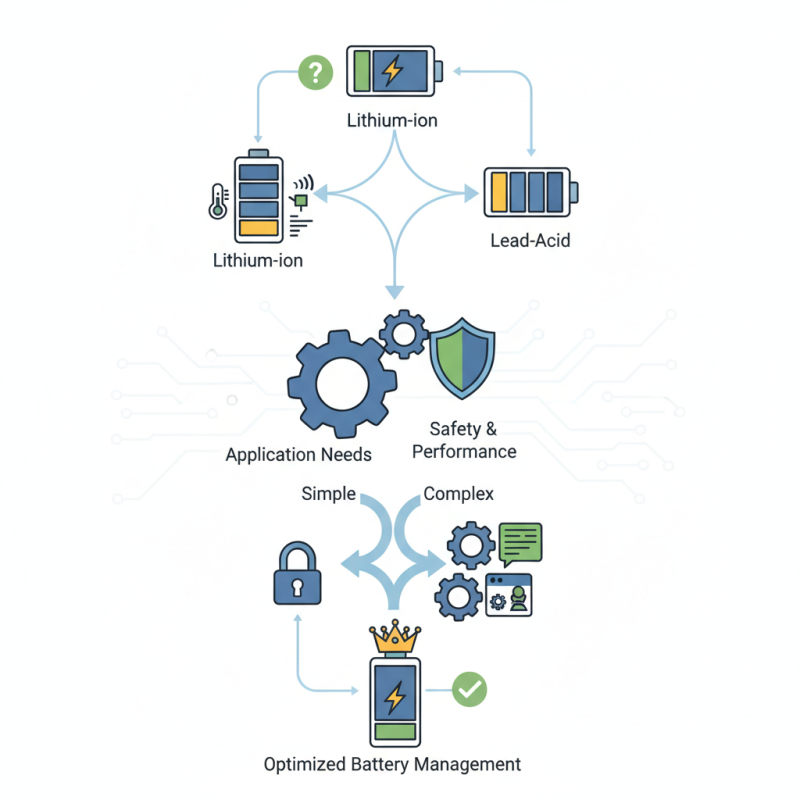
When exploring options, consider your battery chemistry. Lithium-ion, lead-acid, and other types all have different requirements. Your chosen Hardware BMS should match the specifications for maximum efficiency. Inadequate systems can lead to poor performance or even hazards, prompting reflection on previous choices.
Evaluate the features that matter most. Do you need temperature monitoring, cell balancing, or communication protocols? Simplicity might be appealing, but complexity often brings essential functionalities. This decision-making process can be overwhelming, yet informed choices lead to remarkable outcomes. A well-selected Hardware BMS will ultimately redefine your battery management experience.
Understanding the Basics of Battery Management Systems (BMS)
Battery Management Systems (BMS) play a crucial role in managing batteries. They ensure safety, efficiency, and longevity. A good BMS monitors voltage, temperature, and state of charge. Understanding these basics is essential for making informed decisions.
When choosing a BMS, consider your specific needs. Are you working with lithium-ion or lead-acid batteries? Different technologies require different management strategies. Evaluate the capacity and discharge rates too. These factors directly impact the BMS performance.
Tips: Always check for features like cell balancing. This function can extend battery life and performance. Monitor the thermal management options available. Heat can degrade battery health over time.
Additionally, think about communication interfaces. A user-friendly interface can greatly simplify your interactions with the BMS. Troubleshooting becomes easier with clear notifications. Remember, not every BMS suits all applications. Reflect on your unique requirements before making a choice.
Identifying Your Specific Requirements for a BMS
When selecting a Battery Management System (BMS), it’s vital to identify your specific requirements. Start by analyzing the type of battery you will use. Lithium-ion, lead-acid, or other chemistries each have unique management needs. Voltage levels and capacity also play a critical role. Knowing your battery specifications helps narrow down your BMS options.
Consider the intended application. Are you using the BMS for an electric vehicle, renewable energy storage, or industrial use? Each scenario presents different demands. For instance, a BMS for electric vehicles requires real-time monitoring and a robust safety system. On the other hand, a stationary energy storage system may prioritize cost-effectiveness over advanced features.
Safety features are non-negotiable. Your BMS should have overcurrent, overvoltage, and thermal protection measures. Evaluate your comfort level with technology. Some BMS require technical know-how for installation and operation. If you lack experience, look for user-friendly interfaces. Ensure the selected system is reliable and can adapt as your needs evolve. Making the right choice often requires careful thought and a willingness to learn.
Evaluating Different Types of Hardware BMS Options
When evaluating different types of hardware Battery Management Systems (BMS), it’s crucial to consider various features. For instance, voltage range and current handling capacities largely influence performance. According to industry research, around 30% of battery failures stem from inadequate voltage monitoring. Thus, selecting a BMS with adaptable voltage settings can enhance safety and longevity.
Flexibility in configuration is another aspect to ponder. Many users find that modular designs allow for easier upgrades and repairs. A report from a leading energy journal indicates that modular BMS options can reduce overall maintenance costs by 25%. However, potential users should also reflect on their local climate conditions. Extreme temperatures can affect battery performance, necessitating a BMS with robust thermal management features.
Lastly, communication protocols play a critical role in BMS selection. Systems using CAN or RS-485 protocols offer better interoperability with various devices. A survey revealed that 40% of users encountered difficulties with compatibility during integration. Therefore, it’s wise to ensure that the chosen BMS aligns with existing systems to avoid future integration challenges. Understanding these factors thoughtfully can lead to a more efficient selection process.
Key Features to Consider When Choosing a BMS
When selecting a Battery Management System (BMS), certain features are crucial. You need to consider capacity management. A reliable BMS monitors battery health and charge levels. It prevents damage from overcharging or deep discharging. Precise energy tracking ensures optimal performance.
Safety features demand attention too. A good BMS will include thermal management and fault detection. High temperatures can lead to catastrophic failures. Therefore, systems that have temperature sensors and alarms are essential. Your choice should prioritize protection against short circuits and overloads. These mechanisms will safeguard both the battery and connected devices.
Communication capabilities can enhance user experience. Look for systems with protocols that suit your needs. Some BMS units provide real-time data access through mobile apps. This can be useful for monitoring battery performance remotely. However, ensure the interface is intuitive. Complicated systems might create confusion. Balancing usability and functionality is key during the selection process.
Assessing Cost vs. Performance in BMS Selection
When selecting a Battery Management System (BMS), cost and performance often clash. Higher-priced systems may boast advanced features. However, is that what you genuinely need? Understanding your requirements is key to making an informed choice.
Budget constraints play a significant role. When investing in a BMS, consider the essential functionalities needed to optimize your battery performance. For instance, basic systems may cover fundamental safety and monitoring aspects. They usually come at a lower cost. Alternatively, advanced systems offer in-depth analytics and enhanced protection. Their higher initial price may yield long-term savings due to improved efficiency and extended battery life.
Consider the long-term implications of your choice. A cheap BMS might save money initially but could lead to expensive issues later. Assess the trade-offs between upfront costs and the durability of the system. Research and expert advice can help clarify your options. Sometimes, spending a little more upfront can prevent larger costs down the line. Trial and error can be enlightening but might also lead to setbacks. Choose wisely, and keep reflecting on your choices.