How to Choose a Large Capacity Lithium Ion Battery for Your Needs?
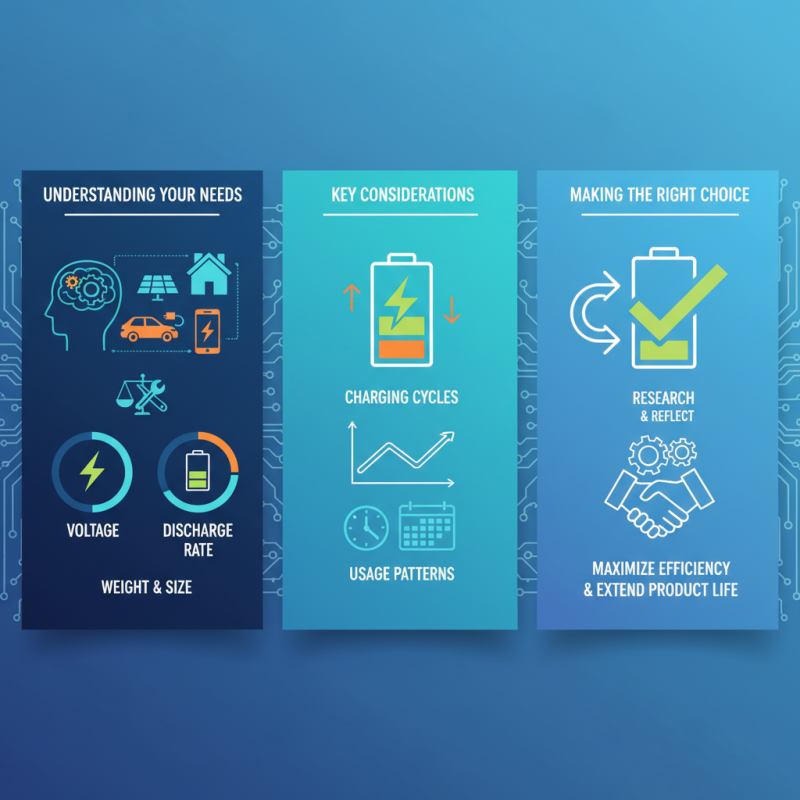
When selecting a large capacity lithium ion battery, understanding your needs is crucial. Renowned expert Dr. Jane Carter once stated, "Choosing the right battery can maximize efficiency and extend product life." Her insight drives the importance of careful consideration in this field.
A large capacity lithium ion battery can power many devices, from electric vehicles to renewable energy systems. Knowing the specifications, such as voltage and discharge rate, helps tailor your choice. Moreover, consider factors like weight and size. A bulky battery may not fit well in compact designs.
It is easy to overlook the charging cycles of these batteries. They vary significantly, and this can affect longevity. Users often fail to assess their actual usage patterns. This oversight can lead to poor performance or rapid degradation. Taking time to research and reflect on your unique needs is invaluable.
Understanding Lithium Ion Battery Basics and Technologies
Choosing a large capacity lithium-ion battery involves understanding its foundational technologies. Lithium-ion batteries operate on the principle of lithium ions moving between anode and cathode during charge and discharge cycles. This movement generates power. According to the International Energy Agency, 60% of global battery production is lithium-ion. It's a dominant choice for many applications due to efficiency and energy density.
One crucial factor to consider is the battery's capacity measured in ampere-hours (Ah). A higher Ah rating means longer use between charges. For instance, a 100 Ah battery can power a device drawing 10 amps for 10 hours. However, higher capacity often comes with increased weight, which may not suit all applications.
Tips:
1. Check the cycle life: A battery's life is crucial. Aim for a cycle life of over 300-500 cycles.
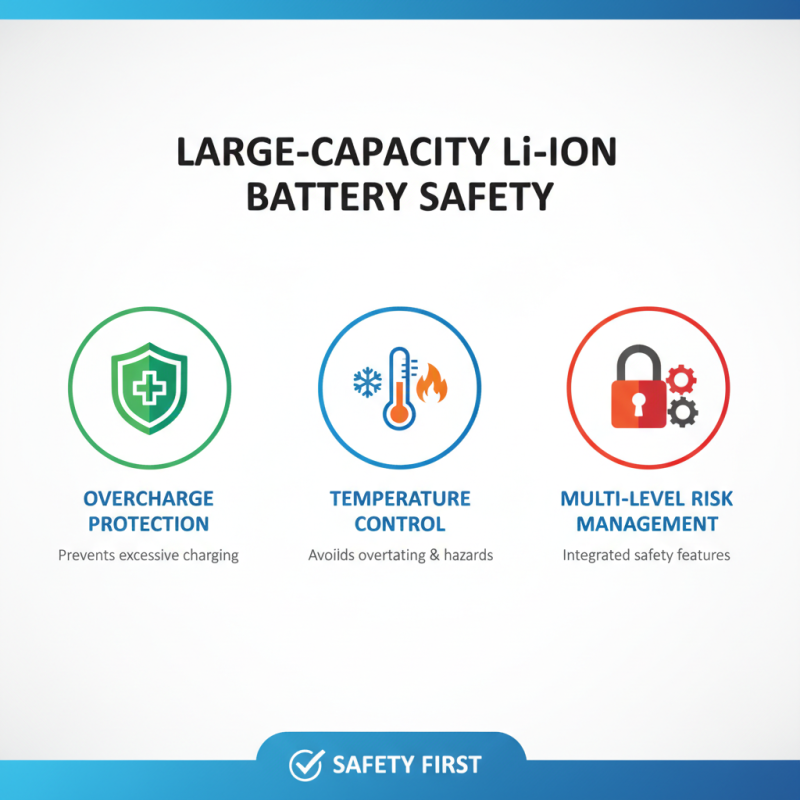
2. Monitor temperature: Extreme heat can degrade battery life. Choose batteries designed for the operating temperatures of your environment.
3. Be cautious with pricing: Sometimes, cheaper options can lead to significant long-term costs due to shorter life.
Also, consider charging speed. Some batteries support fast charging, while others do not. Careful evaluation of these details can significantly impact performance and satisfaction.
Identifying Your Energy Requirements and Application Needs
When selecting a large capacity lithium-ion battery, understanding your energy requirements is essential. Begin by assessing the total energy consumption of your devices. Calculate how many watt-hours they use daily. For example, an electric bike might require 500 watt-hours for a full day of use, while a portable power station could need more.
Next, identify your application needs. Will you use the battery for renewable energy storage, powering tools, or camping? Each use case has unique demands. Outdoor enthusiasts may prefer lightweight options, while stationary applications could focus on battery longevity. Determine if fast charging or temperature tolerance is vital for your situation.
Don't overlook potential challenges in your selection. Poorly matched batteries can reduce efficiency. It's crucial to avoid oversizing or undersizing the battery. Oversizing can lead to wasted costs and resources. Under-sizing may leave you with insufficient power. Test your assumptions by conducting a trial with your devices to clarify their actual needs. Perfect decisions are rare; flexibility and adjustment are key.
Evaluating Battery Capacity, Voltage, and Size Specifications
Choosing the right lithium-ion battery involves understanding key specifications. Focus on capacity, voltage, and size. Capacity measures how much energy a battery holds. It’s typically rated in ampere-hours (Ah). A higher Ah rating means longer usage between charges. Think about your devices' power requirements. Some gadgets may need more capacity than others.
Voltage indicates the electrical potential of the battery. Common voltages for lithium-ion batteries range between 3.2V and 3.7V. Higher voltage can deliver more power but also demands more from your device. Consider the compatibility; mismatched voltage can lead to inefficiency or damage. Size is equally important. A large battery may have better capacity, but it can also be cumbersome. Make sure the battery fits your space.
Reflect on your actual needs before deciding. It's easy to choose a larger battery out of preference. Assess how often you will use the device and where the battery will be placed. Sometimes, a smaller battery might suffice. Efficiency doesn’t always come from size. Take time to weigh your options thoroughly.
How to Choose a Large Capacity Lithium Ion Battery for Your Needs?
| Battery Type |
Capacity (mAh) |
Voltage (V) |
Size (mm) |
Weight (g) |
Cycle Life |
| 18650 |
2500 |
3.7 |
18.6 x 65.2 |
45 |
500 |
| 21700 |
4000 |
3.7 |
21.0 x 70.0 |
69 |
1000 |
| pouch cell |
6000 |
3.7 |
100 x 100 x 10 |
150 |
800 |
| LiFePO4 |
3000 |
3.2 |
100 x 110 x 60 |
700 |
2000 |
| Li-ion Polymer |
5000 |
3.7 |
150 x 90 x 5 |
300 |
1000 |
Comparing Costs, Brands, and Warranty Options for Longevity
When selecting a large capacity lithium-ion battery, considering
costs, brands, and warranty is crucial. Industry reports indicate
that lithium-ion batteries can vary significantly in price. For instance, the cost per kilowatt-hour
can range from $100 to $300. A more affordable option might not always guarantee better value.
Sometimes, paying a premium can lead to longevity and performance.
Warranty options are pivotal. A reliable battery typically comes with a warranty of
5 to 10 years. Some manufacturers offer extended warranties,
which can be reassuring. A short warranty may signal potential issues. It’s essential to read the
fine print. Warranty terms often dictate what is covered and any
limitations that may exist.
Brand reputation also matters. Research shows that brands with strong customer support
typically have better customer satisfaction. However, not all renowned brands deliver equally.
Some smaller companies can provide excellent products but lack recognition. Reflecting on these
aspects can help avoid disappointments and ensure you make
a well-informed decision.