Top 5 Best Power Lithium Battery Options for Your Needs?
When it comes to choosing a power lithium battery, many options are available. These batteries are known for their efficiency and longevity. However, selecting the best one for your needs can feel overwhelming.
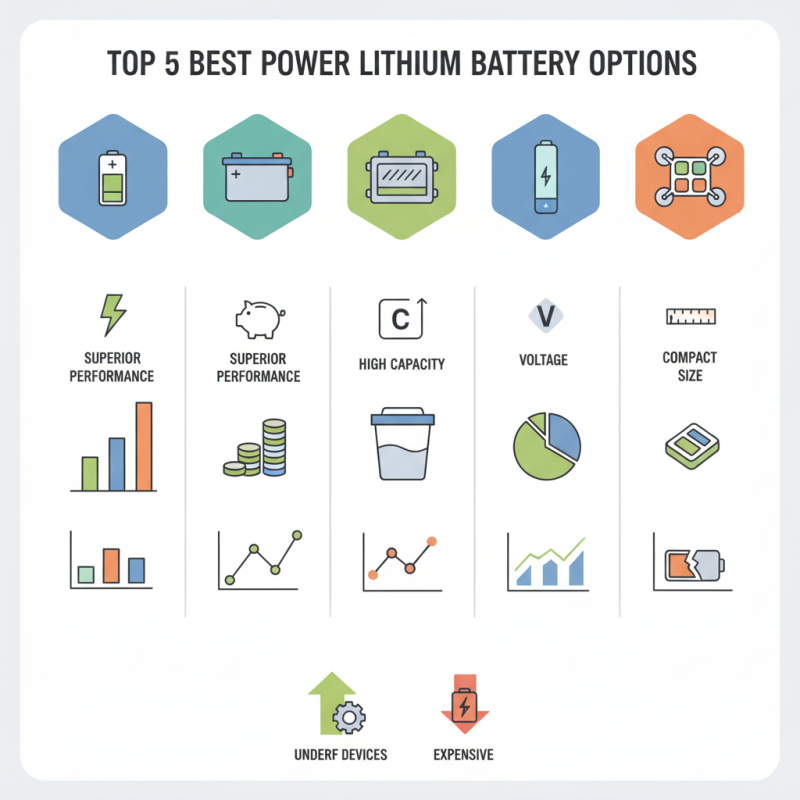
You may find that some batteries offer superior performance, while others focus on affordability. It's crucial to consider factors like capacity, voltage, and size. The right power lithium battery can enhance your devices' functionality, whether for personal gadgets or industrial applications.
Power lithium batteries are not perfect. Some may underperform in specific conditions. Others could be more expensive without offering significant benefits. Analyzing these factors can lead to better choices suited to your unique requirements.
Understanding Lithium Batteries: Types and Applications
Lithium batteries have become essential in various applications. Understanding their types helps us choose the best option. There are several types of lithium batteries. Lithium-ion and lithium-polymer are the most common.
Lithium-ion batteries excel in energy density. They can store more energy per unit weight. This is why they are widely used in electric vehicles. In fact, studies show that lithium-ion cells have an energy density of 150-250 Wh/kg. This efficiency makes them popular. However, they can experience issues like voltage instability. This requires careful management to ensure safety.
Lithium-polymer batteries offer flexibility in design. They can be made in different shapes and sizes. This feature is appealing for portable electronics. Yet, they generally have a lower energy density than lithium-ion. Reports indicate they typically range around 100-200 Wh/kg. Users should consider this when selecting a battery type. The choice greatly impacts performance and usability.
Top 5 Best Power Lithium Battery Options for Your Needs
| Battery Type |
Capacity (Ah) |
Voltage (V) |
Cycle Life |
Weight (kg) |
Applications |
| Lithium Iron Phosphate (LiFePO4) |
100 |
12.8 |
2000+ |
12 |
Solar Storage, Electric Vehicles |
| Lithium Cobalt Oxide (LiCoO2) |
50 |
3.7 |
500 |
0.5 |
Smartphones, Laptops |
| Lithium Manganese Oxide (LiMn2O4) |
75 |
3.7 |
1500 |
1 |
Power Tools, E-bikes |
| Lithium Nickel Manganese Cobalt (NMC) |
80 |
3.7 |
1000 |
1.5 |
Electric Vehicles, Energy Storage |
| Lithium Titanate (LTO) |
60 |
2.4 |
7000+ |
1.2 |
Rapid Charging Applications, Hybrid Vehicles |
Factors to Consider When Choosing a Lithium Battery
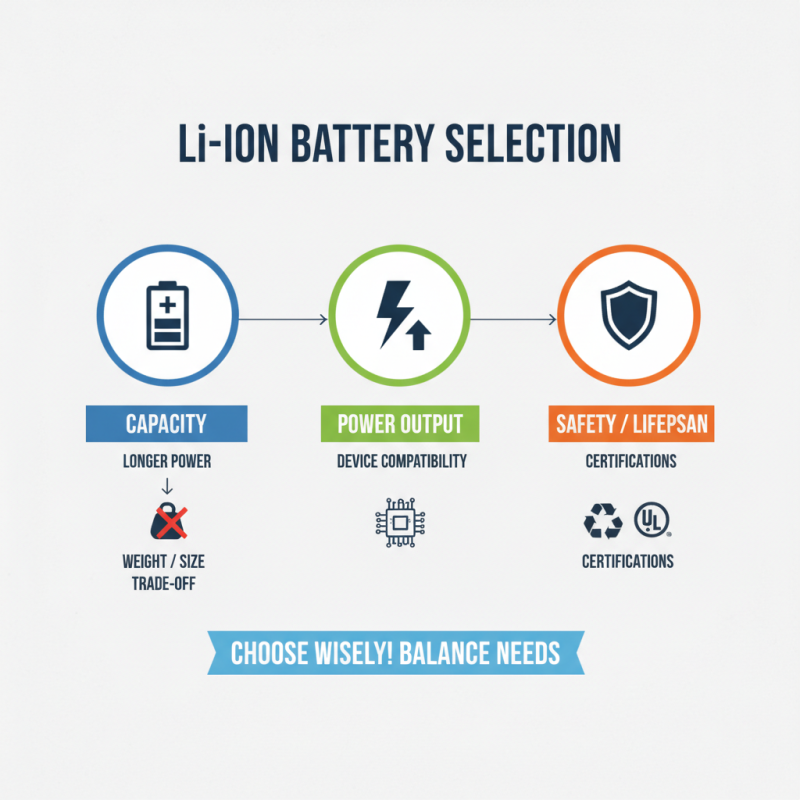
When choosing a lithium battery, several factors come into play. First, consider the battery's capacity. This determines how long the battery can power your device. A higher capacity might be tempting, but that often comes with increased weight and size. Think about the trade-offs.
Next, look at the discharge rate. If your device requires high bursts of power, you'll need a battery that can handle it. A battery with a low discharge rate may struggle under heavy use. Pay attention to the temperature range as well. Some batteries perform poorly in extreme heat or cold, affecting longevity.
Don't forget the lifespan of the battery. Some may degrade faster than others, leading to premature replacement. However, longer-lasting batteries are often more expensive upfront. Reflect on your actual usage. Will you need frequent replacements, or are you okay with spending more initially? Understanding these factors will guide you in selecting the best lithium battery for your specific needs.
Top 5 Lithium Battery Options: Features and Specifications
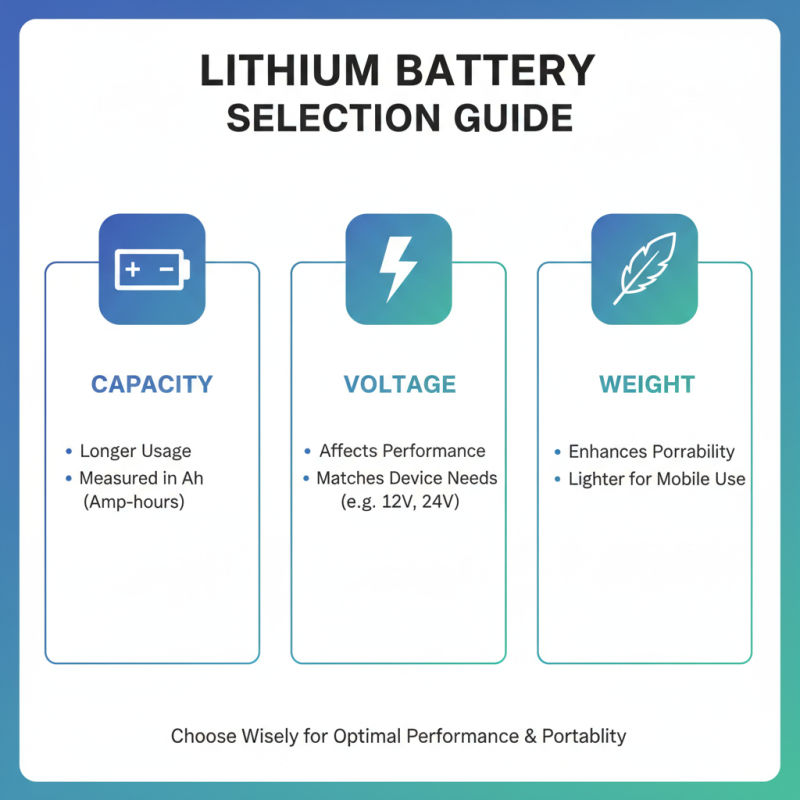
When selecting the best lithium battery options, consider features and specifications carefully. Check the capacity, voltage, and weight. Higher capacity means longer usage times. Voltage affects performance, especially in demanding applications. A lighter battery can greatly enhance portability.
Lithium batteries vary in design and efficiency. Some offer rapid charging, ideal for frequent use. Others focus on longevity, perfect for extended adventures. Pay attention to discharge rates as well. Faster discharge also translates to quicker depletion. This can be critical for high-drain devices.
Tip: Always assess your specific needs before making a choice. Think about your daily usage. What devices will you power? Also, consider safety features like thermal protection. This can prevent overheating, an essential aspect for reliability.
Comparative Analysis of Battery Performance and Lifespan
When choosing the right lithium battery, performance and lifespan are crucial. Different batteries have distinct strengths and weaknesses. For example, some excel in high-drain devices, while others offer longer usage times. A battery that lasts longer may not always deliver the best performance in demanding situations. This creates a dilemma for users.
Battery performance can vary significantly in real-world applications. Factors like temperature and load can affect how well they work. Some batteries might degrade faster under stress. Others may provide consistent power, but with a shorter lifespan. It’s important to consider how you will use the battery. Using it in extreme conditions can lead to quick wear and tear.
Comparative analysis shows that not all batteries perform equally across the board. Some may excel in energy density but may fall short in terms of recharge cycles. Understanding your specific needs is essential. This reflection helps in making informed decisions. Juggling performance versus longevity can be tricky but necessary for optimal use.
Top 5 Best Power Lithium Battery Options for Your Needs
Cost-Effectiveness and Maintenance of Lithium Batteries
When considering lithium batteries, cost-effectiveness is crucial. These batteries offer impressive longevity, reducing the need for frequent replacements. A typical lithium battery can last over a decade if maintained properly. However, initial costs can be higher than traditional batteries. This makes it essential to weigh long-term savings against upfront expenses.
Maintenance is another critical aspect. Lithium batteries generally require less upkeep, but they aren’t completely maintenance-free. Regular checks for corrosion and ensuring the terminals remain clean are necessary. Users often overlook these details, leading to premature battery failure. Understanding charging cycles is vital; overcharging can degrade battery life.
Choosing the right lithium battery involves more than just price. Look for options that fit your specific needs. Consider factors like energy density and discharge rates. Paying attention to these details can enhance performance. Yet, many people focus too much on price alone, missing out on significant benefits. Take time to research and reflect on what truly suits your requirements.