China Best Glasses With Camera In Them Suppliers
China Best Glasses With Camera In Them Suppliers
Glasses With A Camera In Them are moving from novelty products toward practical wearable devices. They can capture short videos, support hands-free calls, and provide lightweight visual assistance. However, camera quality alone does not prove supplier reliability. Battery life, heat control, optical comfort, and data protection matter just as much.
Grand View Research estimates that the global smart glasses market will expand strongly through 2030, with artificial intelligence and hands-free computing driving adoption. IDC’s recent wearable-device research also shows continued growth across smart wearables, although product categories and reporting methods vary. That gap matters. Buyers should compare test conditions carefully, rather than trusting impressive figures on a product page.
Meta CTO Andrew Bosworth described glasses as “the ideal form factor for AI.” His comment reflects a major industry direction, but it does not remove practical limitations. A camera may produce clear images outdoors yet struggle in dim cafés. A frame may feel comfortable for ten minutes, then become heavy during a full workday. The best China suppliers should provide documented specifications, sample testing, firmware support, quality-control records, and transparent privacy functions. They should also explain recording indicators and user controls clearly.
This guide examines leading Chinese suppliers through an experience-based and evidence-focused lens. It considers lens options, camera resolution, microphone performance, charging design, customization, certifications, and after-sales service. The market is uneven. Some claims still need independent verification. That is why responsible sourcing requires more than a low quotation.
Types of Camera-Equipped Glasses Available From Chinese Suppliers
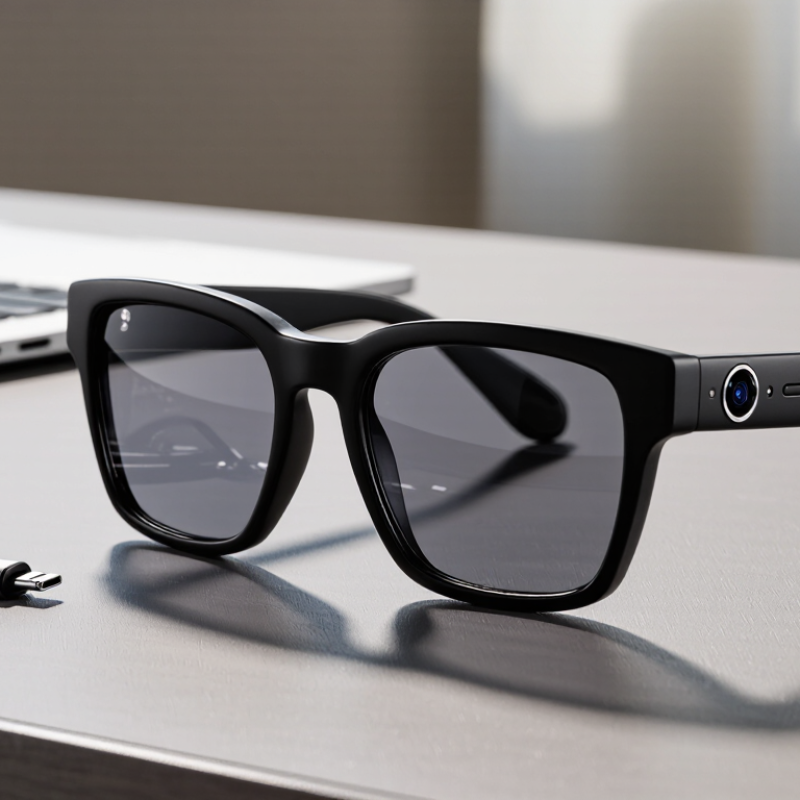
Chinese suppliers offer several types of camera-equipped glasses for different working and personal needs. Basic camera glasses usually include a small front camera, internal storage, and a rechargeable battery. They suit hands-free photos, short videos, and simple field records. Some models add microphones and open-ear speakers for calls or voice notes. Battery life can vary sharply, especially during continuous recording.
Industrial smart glasses are designed for inspections, warehouse guidance, training, and remote technical support. They may include stronger frames, adjustable lenses, Wi-Fi, and small displays. Some suppliers also provide sports-focused glasses with lightweight materials, water resistance, and wide-angle cameras. These features sound useful, but a wide lens can distort nearby objects. That matters.
When comparing Chinese suppliers, buyers should request sample testing and clear technical documents. Check video resolution, storage format, charging time, operating temperature, and data protection controls. A visible recording indicator is important for transparent use. Recording should follow local privacy rules and require consent where necessary. I would not trust a specification sheet alone. Test the glasses while walking, speaking, and working under uneven lighting. Some products perform well indoors but produce blurry footage outdoors. Frame comfort also deserves attention, because heavy arms can cause pressure after an hour. Suppliers with stable inspection records, responsive support, and replaceable parts are usually safer long-term choices. Connectivity can still be inconsistent.
Key Features to Compare When Choosing Smart Camera Glasses
Choosing smart camera glasses requires more than checking megapixels. A 2024 Grand View Research analysis valued the global smart glasses market at about USD 1.6 billion in 2023. It also projects strong growth through 2030. This expansion makes careful comparison essential. Look for a camera with stable video, natural color, and useful low-light performance. A high resolution number means little if footage shakes during walking. Test the field of view beside a doorway or desk. The scene should feel neither cramped nor distorted.
Battery life needs practical attention. Compare recording time, standby time, charging speed, and storage capacity. A camera that lasts only two hours may fail during travel or field work. Check microphone clarity in wind and crowded streets. Open-ear audio should remain understandable without becoming painfully loud. IP ratings can indicate resistance to dust and water, but they do not guarantee safe use in every weather condition. Specifications are not the whole experience.
Tips: Confirm visible recording indicators, physical controls, data settings, warranty terms, and app compatibility. Review independent tests, not only supplier claims. Wear the glasses for twenty minutes. Pressure near the nose or ears becomes obvious. Privacy design matters, too; a clear status light can help people understand when recording occurs. I would also test export speed before purchase. Fast capture is useful, but slow transfers quietly ruin the workflow. Some advertised features may feel impressive and remain rarely used. That is worth questioning.
How China’s Camera Glasses Suppliers Design and Manufacture Their Products
China’s camera-glasses suppliers are redesigning eyewear around compact imaging modules. Grand View Research estimated the global smart-glasses market at about USD 1.93 billion in 2023, with strong growth expected through 2030. That demand encourages smaller cameras, lighter frames, and lower power consumption.
In a typical factory, engineers first map the camera position, lens angle, battery space, and nose-bridge weight. They then test optical modules before fitting them into injection-molded frames. Flexible circuits help route power through narrow temple arms. Suppliers commonly use CNC samples, 3D-printed fixtures, and repeated hinge tests during development. Small details matter. A loose temple cover can create vibration in recorded images.
Manufacturing teams usually combine incoming-material inspection, assembly checks, firmware testing, and final optical calibration. ISO 9001-based quality systems can improve traceability, but certification alone cannot guarantee product consistency. The weak point is often heat near the battery and processor. Engineers may use thermal cycling, charging tests, and several-hour aging tests to identify failures. IEC 62368-1 safety principles also guide evaluation of electronic components and power systems.
Privacy-by-design is becoming equally important. Visible recording indicators, physical controls, restricted data access, and clear user instructions should be built into the product. Suppliers must also review regional privacy requirements before shipment. No process is perfect. Lens distortion, uneven microphone performance, and uncomfortable weight can still appear after mass production. Independent sampling and long-wear testing remain necessary.
Quality, Privacy, and Safety Standards for Camera-Enabled Eyewear
China’s camera-enabled eyewear suppliers should prove quality beyond attractive product photos. Ask for sample units, factory records, and recent independent laboratory reports. Check optical clarity, frame strength, battery temperature, charging protection, and skin-contact materials. A reliable supplier should explain its testing process clearly, not hide behind vague claims.
Privacy needs equal attention. Look for a visible recording indicator, physical lens cover, secure password controls, and encrypted storage. Local processing can reduce unnecessary data transfers. Suppliers should provide clear deletion procedures and user consent settings. A bright indicator alone is not proof of responsible design. I have seen specifications that sounded impressive but lacked practical privacy controls.
Tips: Test glasses during walking, bright sunlight, and indoor use. Check whether the camera activates accidentally. Request documentation for electrical safety, electromagnetic compatibility, and material testing. Confirm how footage is stored, accessed, and erased. Do not rely only on factory certificates; verify important claims with an independent testing service. Even experienced buyers can miss small risks, especially when heat, comfort, and privacy are assessed separately.
How to Select a Reliable China-Based Camera Glasses Supplier
China Best Glasses With Camera In Them Suppliers
Selecting a reliable China-based camera glasses supplier requires more than comparing prices. Visit the factory, or request a live video audit of its production floor. Check lens alignment, frame durability, camera placement, and battery testing procedures. A polished sample can mislead. Request several units from different production batches before approving an order.
Ask for clear technical documents covering resolution, storage, charging cycles, firmware updates, and replacement parts. Verify quality-control records and independent testing where available. The supplier should explain how recorded data is protected and deleted. Privacy matters. Products must support lawful, consent-based use. Confirm that sales materials avoid exaggerated claims.
Communication reveals practical reliability. Test response times, written specifications, packaging, and delivery schedules. A dependable supplier identifies limitations instead of promising perfect performance. Ask about defective-unit rates and warranty handling in writing. Inspect the companion application carefully, including permissions and account security. Some suppliers may have strong hardware but weak software support. That weakness can become expensive after shipment. Recheck every detail before signing, especially customization terms and after-sales responsibilities.
